What Is Ultrafine Grinding and Why Apply It to Chicken Protein?
Ultrafine grinding refers to the process of reducing chicken protein powders to extremely small particle sizes, typically achieving a D90 particle size of around 80 mesh (~177 μm) or finer. This level of micronization surpasses conventional grinding methods, which often produce coarser particles and suffer from uneven size distribution and limited functional improvements.
Traditional grinding techniques—such as hammer milling or coarse pulverizing—often result in larger, inconsistent particles that can limit solubility, bioavailability, and functional properties like gelling or emulsification when applied to chicken protein powders. By contrast, ultrafine grinding targets a narrow and controlled particle size distribution, ensuring enhanced performance and integration into food systems.
Chicken protein sources subjected to ultrafine grinding include:
- Myofibrillar proteins extracted from muscle tissues known for their excellent gelling and emulsifying behavior.
- Whole chicken powder, which combines muscle, fat, and connective tissues.
- Meat-bone composites, incorporating calcium-rich bone particles for nutrient-enriched powders.
The key drivers for applying ultrafine grinding to chicken protein are to:
- Improve protein bioavailability by increasing surface area for better digestion and nutrient release.
- Enhance solubility and dispersibility in liquids for cleaner incorporation into beverages, supplements, and functional foods.
- Boost gelling and emulsifying properties, critical in texture development for meat analogs or high-protein formulations.
- Enable seamless product integration, making powders easier to mix and stabilize within complex recipes.
Ultrafine grinding transforms chicken protein powders into highly functional, nutritionally superior ingredients that meet modern food industry demands.
Key Benefits of Ultrafine Grinding Chicken Protein
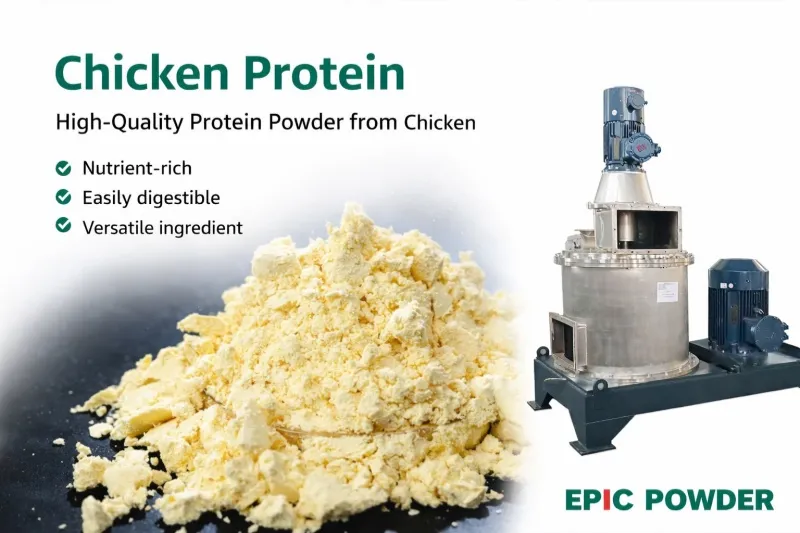
Ultrafine grinding of chicken protein powder brings notable advantages across functionality, nutrition, and physical traits. This process refines chicken myofibrillar protein and whole chicken powders into ultrafine chicken protein powder that excels in these areas:
| Benefit Category | Details |
|---|---|
| Functional Properties | – Improved gelling and water-holding ability – Enhanced emulsification and foaming quality |
| Nutritional Advantages | – Higher protein digestibility – Better release and absorption of nutrients |
| Physicochemical Traits | – Better flowability and bulk density for easier handling – Increased brightness and flavor retention |
These improvements support broader applications such as:
- Functional foods
- Plant-based and meat analogs
- High-protein supplements
- Calcium-enriched powders with improved mixability
By upgrading chicken protein powder’s texture and bioavailability, ultrafine grinding helps brands create superior nutritional products that meet diverse consumer demands. For those interested in seeing how ultrafine grinding enhances protein powders, similar advancements can be found in pea protein powder health benefits and innovations.
The Role of Air Classifier Mills in Chicken Protein Processing
Air classifier mills (ACMs) are key to ultrafine grinding chicken protein powders efficiently. They work by combining impact grinding with an air classification system that separates particles based on size. This technology allows for precise control over particle size distribution, especially important for achieving fine powders like chicken protein with a D90 of 80 mesh (~177 μm) or finer.
Compared to other mills, ACMs offer major advantages: they operate through dry milling, eliminating moisture and reducing heat generation that can damage delicate chicken proteins. This preserves protein integrity and functionality better than wet grinding or high-heat milling methods. Moreover, ACMs produce a narrow, consistent size distribution, which is critical for uniform performance in applications such as sports nutrition or meat analogs.
The process flow in an air classifier mill includes feeding the chicken protein material, grinding it with high-speed impact, classifying particles via adjustable airflows, and collecting the ultrafine powder separately. This scalable and efficient system is ideal for producing ultrafine chicken protein powder with enhanced functional properties, making it a preferred choice for dry milling animal protein like chicken myofibrillar protein or meat-bone composites.
For those interested in more detail about ACM dry milling technologies applied in food protein processing, Epic Powder’s solutions highlight optimal ultrafine grinding strategies. You can find related insights in their discussions on efficient ultrafine grinding of food proteins and similar applications.
How Epic Powder’s Air Classifier Mills Optimize Chicken Protein Grinding
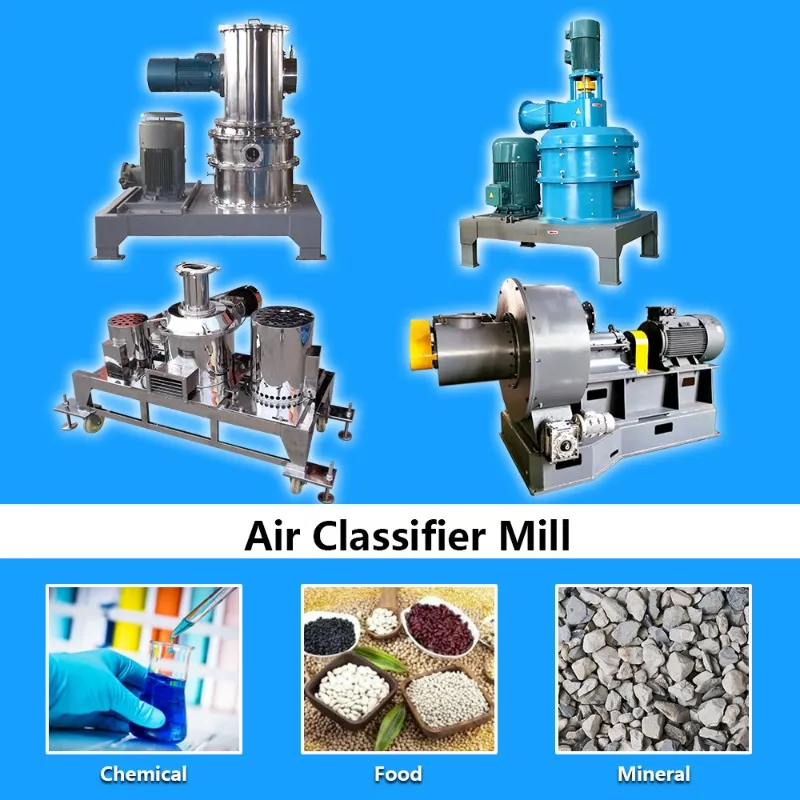
Epic Powder’s air classifier mills (ACM) are designed specifically to meet the demanding needs of ultrafine grinding chicken protein powders. Their systems deliver precise control over particle size distribution, consistently achieving a D90 of 80 mesh (~177 μm) or finer, which is crucial for producing high-quality ultrafine chicken protein powder.
Key Features and Customizations:
- Precise Particle Size Control: Fine-tune classifier speed and airflow to maintain narrow particle size distribution, essential for consistent functional and physicochemical properties.
- Energy Efficiency: Optimized motor and airflow designs reduce power consumption while maintaining high throughput—ideal for large-scale poultry protein production.
- Food-Grade Cleanability: Stainless steel construction with easy-to-dismantle parts ensures hygienic operation and quick cleaning to meet strict food safety standards.
- Dry Milling Process: Avoids heat damage and preserves protein bioactivity, unlike wet or heat-intensive methods.
Benefits for Chicken Protein Processing:
| Benefit | Impact |
|---|---|
| Preserves Protein Integrity | Maintains nutritional value and solubility |
| Maximizes Yield and Quality | Minimizes waste, improves powder flow and texture |
| Consistent Particle Size | Enhances gelling, emulsification, and mixing in final products |
| Scalable Design | Supports demand from small artisan batches to large industrial runs |
Epic Powder’s ACM technology stands out for balancing precision grinding with operational efficiency, making it the preferred choice for ultrafine grinding of chicken myofibrillar protein, whole chicken powder, and even chicken bone paste. This ensures manufacturers consistently produce micronized poultry protein powders that unlock superior functional properties.
For a deeper dive into similar air classifier mill advantages in protein processing, including how precision milling enhances product quality, check out our insights on why air-classifying mills are superior for soy protein isolate grinding.
Factors Influencing Ultrafine Grinding Outcomes for Chicken Protein
Getting the best results from ultrafine grinding chicken protein depends heavily on controlling several key factors. Particle size metrics like D90 and D50 are critical—they show the upper and median particle size, respectively, and help ensure the powder achieves the target fineness, typically around 80 mesh (~177 μm). Consistent particle size means better texture, solubility, and functional properties for your ultrafine chicken protein powder.
Feedstock preparation is equally important. Proper moisture control is a must—too much moisture leads to clumping and reduces grinding efficiency; too little can cause dust and static issues. Pre-crushing larger chunks before ultrafine grinding reduces the load on the mill and improves overall yield.
Operational settings also play a huge role:
- Classifier speed: Sets the cut-off size for particles, affecting powder uniformity.
- Airflow rate: Influences heat removal and particle classification.
- Feed rate: Balances throughput with milling efficiency and powder quality.
A few challenges are common in dry milling animal protein like chicken myofibrillar protein grinding. Protein denaturation can occur if heat isn’t managed well, leading to loss of nutritional quality and functional properties. Controlling operating temperatures through optimized airflow and precise classifier settings helps prevent heat damage, similar to the strategies used in preventing heat damage during soy protein ultrafine grinding.
Agglomeration is another hurdle, where fine particles stick together, reducing powder flowability and uniformity. Solutions include moisture control, mill equipment cleaning, and adjusting classifier and feed rates to maintain consistent particle separation.
Mastering these factors ensures your chicken protein powder is not only fine but functional, nutritious, and ready for high-value uses like sports nutrition, pet foods, and calcium-enriched products.
Comparison: Ultrafine Grinding vs. Other Size Reduction Techniques
When it comes to chicken protein ultrafine grinding, choosing the right milling technology is key. Here’s a quick rundown comparing Air Classifier Mills (ACM) with other common techniques like ball milling, jet milling, microfluidization, and wet grinding:
| Milling Method | Dry or Wet | Particle Size Control | Heat Generation | Throughput | Food Safety & Cleanability | Protein Integrity Preservation | Ideal for Chicken Protein Powder |
|---|---|---|---|---|---|---|---|
| Air Classifier Mill (ACM) | Dry | Precise (D90 ~80 mesh/177 μm) | Low | High | Excellent (food-grade cleanability) | High | Best – dry, scalable, preserves protein |
| Ball Milling | Dry or Wet | Moderate | High | Moderate | Variable | Can cause denaturation | Less suitable due to heat and contamination risks |
| Jet Milling | Dry | Very fine | Moderate-High | Moderate | Good | Moderate | Good for micronized poultry protein but less scalable |
| Microfluidization | Wet | Very precise | Low | Low-Moderate | Good | Very high | Great for emulsions, less practical for dry powder |
| Wet Grinding | Wet | Variable | Heat from water friction | Low-Moderate | Requires drying post-process | Can lead to protein degradation | Less suitable for dry powder applications |
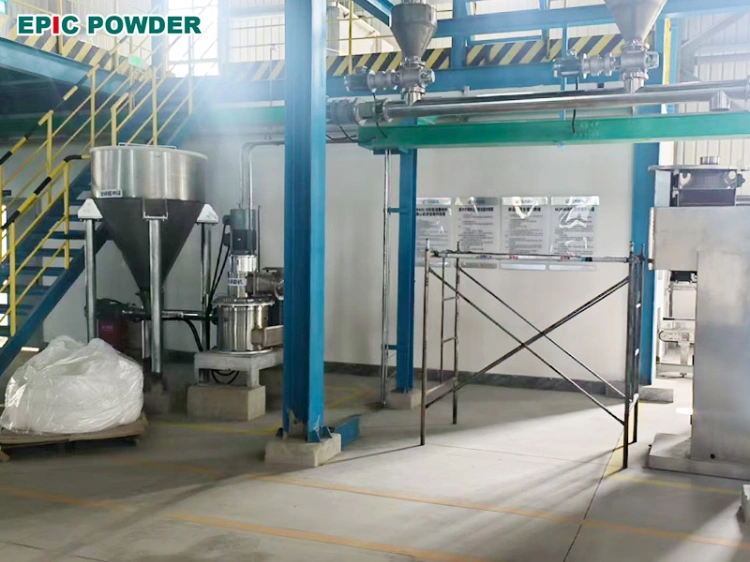
Why ACM Is Preferred for Chicken Protein Ultrafine Grinding
- Dry Process: Avoids moisture-related issues like bacterial growth and simplifies handling.
- Food-Safe & Clean: Easy cleaning means no cross-contamination, crucial for protein powders.
- High Throughput: Efficient for large-scale production of ultrafine chicken protein powder.
- Protein Integrity: Low heat and controlled shear preserve functional properties better.
- Consistent Particle Size (D90 80 mesh): Ensures uniformity for improved gelling, solubility, and bioavailability.
Because of these advantages, the air classifier mill stands out as the top choice for producing ultrafine chicken protein powders with excellent functional and nutritional quality. For a deeper dive on dry, food-safe milling like ACM, see how they perform in related protein powder applications here.
Practical Applications and Industry Examples
Ultrafine grinding of chicken protein powder unlocks a range of practical uses across multiple markets. In sports nutrition, the enhanced solubility and faster digestibility of ultrafine chicken myofibrillar protein make it ideal for high-protein formulas aimed at faster muscle recovery. For elderly foods, the refined particle size improves texture and nutrient availability, supporting easier digestion and better absorption.
In pet food, micronized poultry protein and chicken bone paste ultrafine powders boost protein quality and calcium content without compromising product flowability or flavor. The improved functional properties such as gelling and emulsification also allow for innovative value-added meat-based products with tailored textures and nutritional profiles.
Research confirms that ultrafine grinding significantly improves gelling behavior and increases protein digestibility in both myofibrillar gels and whole chicken powders. These advances make ultrafine chicken protein powder a preferred ingredient for creating nutrient-rich, easy-to-use food systems suited for diverse global consumer needs.
These examples highlight how chicken protein ultrafine grinding supports product innovation by enhancing protein functionality and nutrition, meeting growing demands in health-focused and specialty food sectors. For further insights on ultrafine crushing in food processing, see our detailed overview of ultrafine crushing technology in food and agricultural applications.

“Thanks for reading. I hope my article helps. Please leave a comment down below. You may also contact Zelda online customer representative for any further inquiries.”
— Posted by Emily Chen