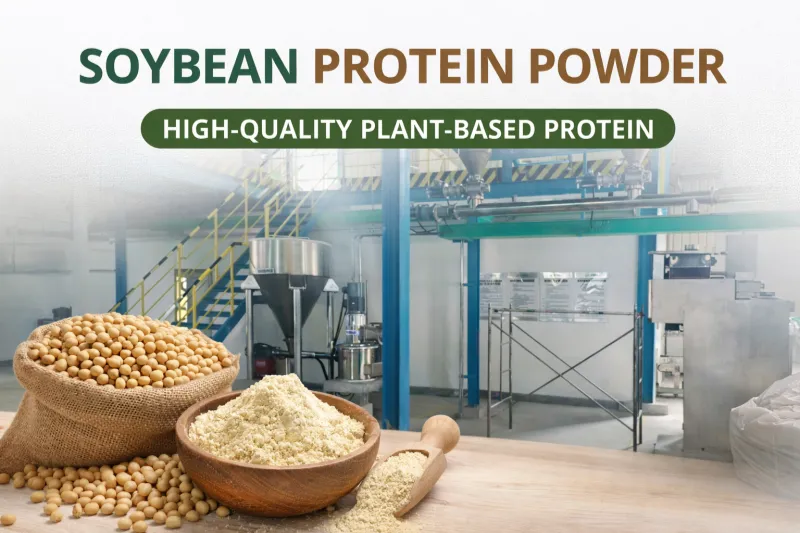
Why Particle Size Matters in Soy Protein Ultrafine Grinding?
When working with soy protein isolate (SPI), particle size is more than just a number—it directly influences functionality, sensory appeal, and nutritional benefits.
Sensory Perception: Smooth Texture Wins
The human palate is surprisingly sensitive to texture. Research shows there’s a biological threshold for roughness detection around 30-40 microns. When soy protein particles exceed this, a gritty or coarse mouthfeel can emerge, which negatively impacts product acceptance. Ultrafine grinding down to a d50 of 20μm creates an exceptionally smooth powder, helping:
- Deliver creamy, consistent textures in plant-based meats and beverages.
- Enhance mouthfeel without needing additional additives.
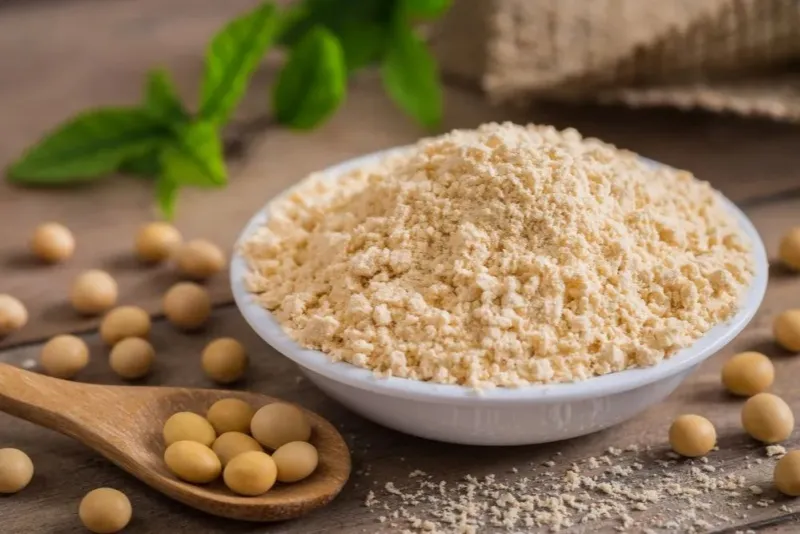
Solubility and Dispersibility: Surface Area Drives Suspension
Smaller particles have a far greater surface area-to-volume ratio, which significantly boosts solubility and dispersibility. With an ultrafine grind, soy protein powder suspends more readily in liquids, leading to:
- Faster hydration times.
- Smoother, lump-free blends.
- Improved stability in formulations like protein shakes and dairy alternatives.
Protein Absorption: Bio-accessibility Boost
Finer milling doesn’t just influence product handling—it also impacts nutrition. Ultrafine particles improve protein availability by:
- Increasing surface contact with digestive enzymes.
- Enhancing protein bio-accessibility and absorption.
- Preserving protein structure when processed carefully, avoiding denaturation.
In short, controlling particle size through ultrafine grinding is crucial for optimizing the functional and physiological performance of soy protein powders—delivering better taste, solubility, and nutrient uptake that today’s food innovators demand.
The Technology: Air Classifier Mills (ACM) for Soy Protein
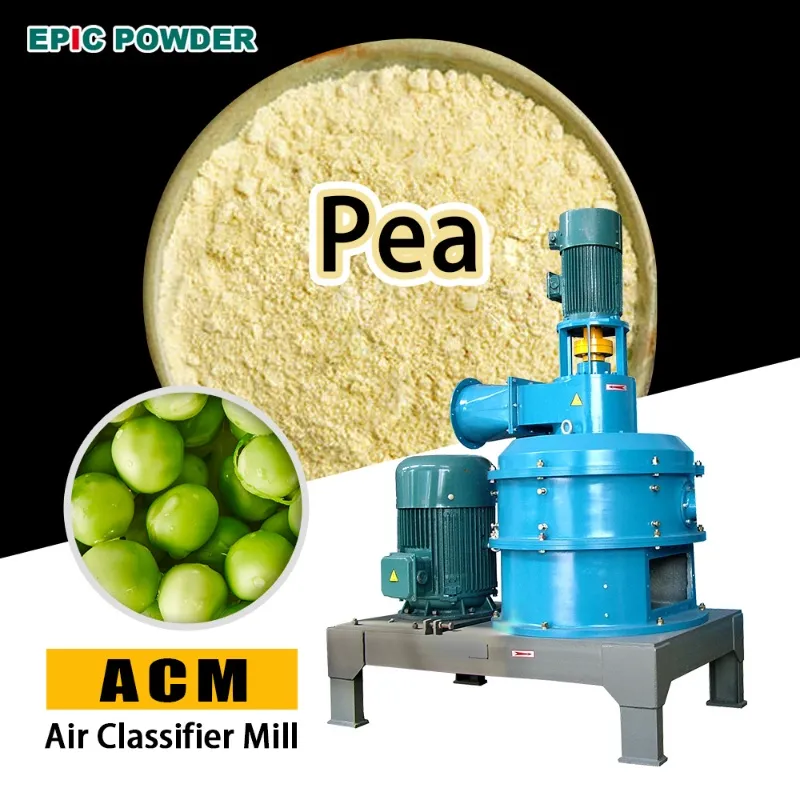
When it comes to soy protein ultrafine grinding, Air Classifier Mills (ACM) stand out as the best choice. Unlike traditional pin or hammer mills, ACMs combine grinding and classification in one step, allowing precise control over particle size. This integrated classification process ensures a consistent d50 around 20μm, ideal for soy protein isolate (SPI) processing, which directly affects solubility and texture.
Why Choose ACM Over Pin and Hammer Mills?
- Finer, more uniform particle size: Pin and hammer mills typically produce broader particle size distribution, causing inconsistency in functionality. ACMs maintain a tight particle size distribution (PSD), crucial for plant-based meat texture optimization and soy protein dispersibility.
- Reduced heat generation: Conventional mills often generate excess heat, which risks protein denaturation. ACMs use a high-speed airflow that cools the grinding chamber, preserving the functional properties of sensitive soy proteins.
- Energy efficiency: ACMs consume less power since the classification wheel sorts particles based on size, reducing over-grinding and improving yield efficiency.
Managing Heat Sensitivity in Soy Protein Grinding
Soy protein is heat-sensitive, and excessive temperature during milling can cause denaturation, negatively impacting solubility and bio-accessibility. The built-in cooling airflow in ACMs helps maintain low processing temperatures, preventing protein damage and ensuring product quality.
By integrating the milling and classification with cooling airflow, Air Classifier Mills offer an advanced solution for producing high-quality, ultrafine soy protein powders. For a deeper look at how air classifier mills control temperature and powder adhesion in protein processing, see our detailed insights on air classifier mill temperature management in pea protein production.
Technical Deep Dive: Achieving the d50 20μm Standard
Ultrafine grinding of soy protein to a d50 of 20μm demands precise control over key process parameters. The main factors influencing particle size distribution (PSD) include:
| Parameter | Role in Grinding | Effect on Particle Size |
|---|---|---|
| Rotor Speed | Impacts grinding force and shear | Higher speed = finer particles |
| Airflow Volume | Controls material suspension and transport | Optimized flow prevents overgrind or agglomeration |
| Classifier Wheel Speed | Separates fine from coarse particles | Faster speed yields narrower PSD near 20μm |
Balancing these parameters ensures a steep PSD curve with minimal d90 outliers, critical for consistent soy protein powder quality and improved protein dispersibility.
Handling Oil and Moisture
Soy protein isolate naturally contains oils and moisture that can cause stickiness, challenging the fine milling process. Effective management strategies include:
- Pre-drying to reduce moisture below threshold levels
- Optimized airflows for continuous particle suspension, preventing buildup
- Use of anti-sticking liners inside the mill chamber
- Regular cleaning cycles to avoid clogging and maintain throughput
Managing stickiness is vital to prevent downtime and ensure smooth operation of the ultrafine impact mill.
For a detailed explanation on how precise classifier wheel speed and airflow balance can sharpen PSD control, consult our article on efficient ultrafine grinding of starch using an air classifier mill. This parallels soy protein ultrafine grinding by emphasizing particle size precision and flow management.
Epic Powder Solutions: Precision Engineering for Soy Processing
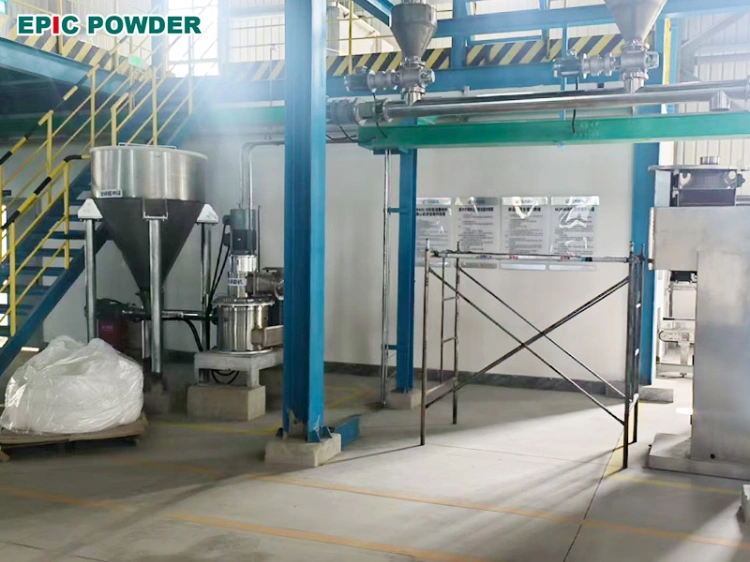
Epic Powder stands out with its specialized Air Classifier Mill (ACM) series designed specifically for food ingredients like soy protein isolate (SPI). These mills deliver precision grinding with tight particle size distribution (PSD) control, targeting a d50 of 20μm to meet the demanding standards of plant-based protein applications. Managing d90 outliers ensures the powder remains uniform—critical for texture and processing consistency.
Hygiene is a top priority—Epic’s ACMs are crafted with stainless steel construction, making them easy to clean and maintain. Dust-free operation minimizes contamination risks, fully supporting food-grade safety standards.
Beyond quality, Epic Powder solutions focus on yield efficiency by reducing product loss during ultrafine grinding. This maximizes output while preserving the functional and nutritional benefits of soy protein.
For a deeper look into how Air Classifier Mills excel in soy protein grinding, explore our detailed overview of the superior ACM technology for soy protein isolate processing.
Beyond Grinding: System Integration & Safety
Safety and smooth integration are key when ultrafine grinding soy protein. Because soy protein powder is fine and dust-prone, dust explosion risks are real. That’s why air classifier mills for soy protein ultrafine grinding often come with ATEX-compliant explosion protection systems. These systems control dust combustibility and maintain a negative pressure environment during milling, minimizing hazard potential without compromising throughput.
On the logistics side, pneumatic conveying is the preferred method to transfer the ultrafine d50 20μm soy protein powder between processing steps. This technique moves powders gently, preserving particle size distribution (PSD) without inducing re-agglomeration or clogging. The result is improved soy protein dispersibility and powder flowability throughout your production line.
Together, these integrated safety features and advanced powder handling systems ensure efficient, hygienic, and risk-free processing of soy protein isolates, ideal for plant-based meat texture optimization and other food-grade applications. For more insights on integrating ultrafine grinding systems, check out our precision solutions for pea protein powder processing and related dry fractionation technologies.

“Thanks for reading. I hope my article helps. Please leave a comment down below. You may also contact Zelda online customer representative for any further inquiries.”
— Posted by Emily Chen