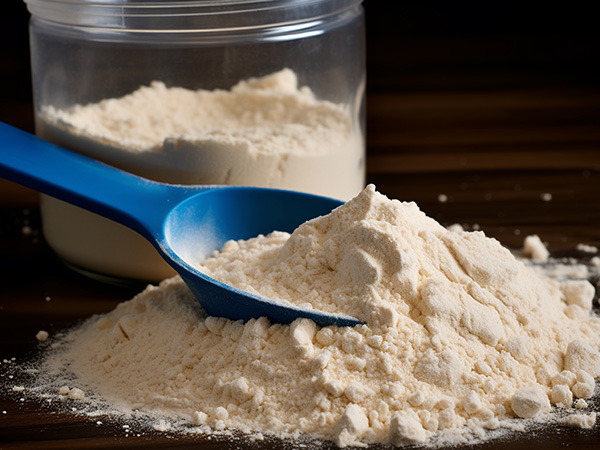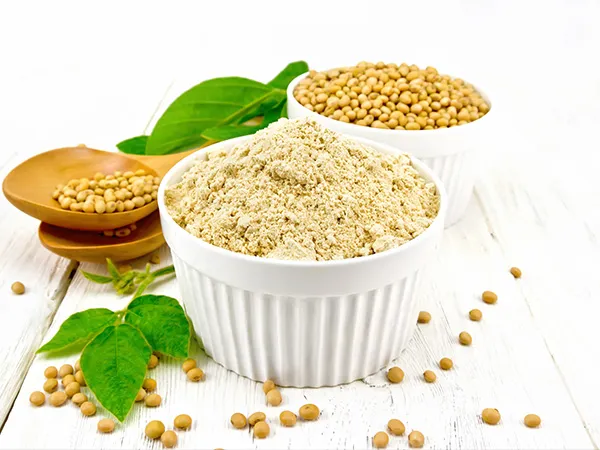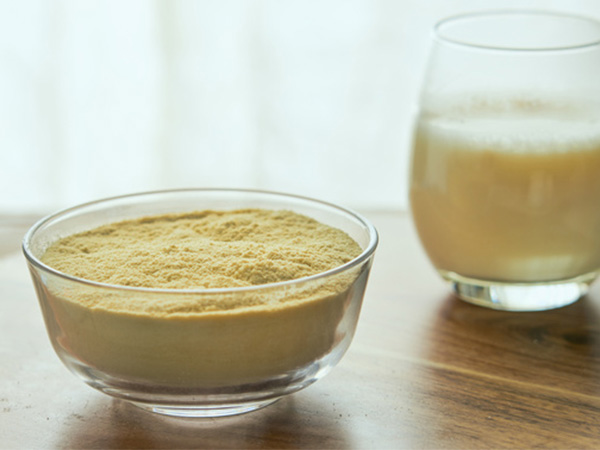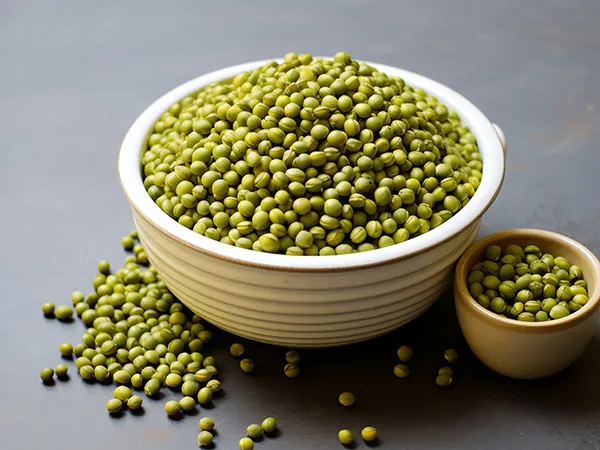
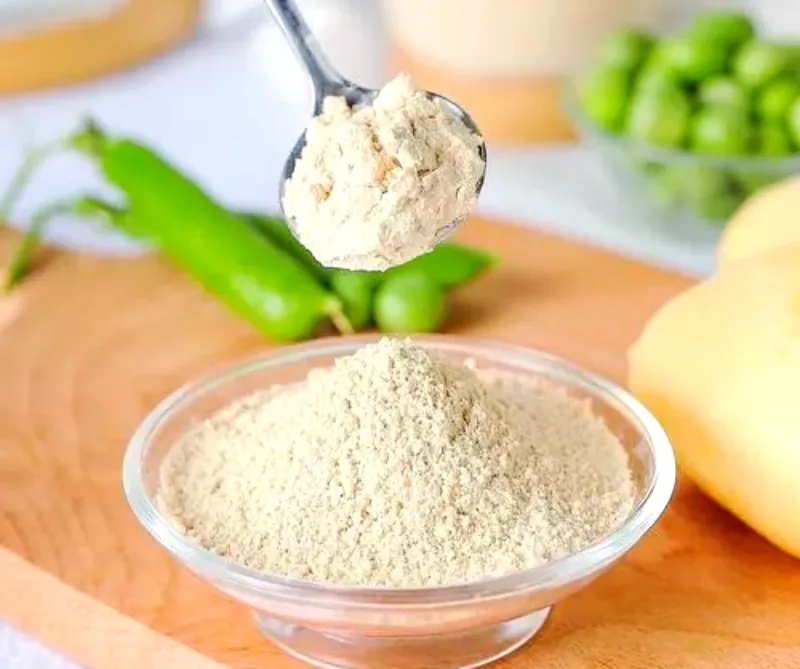
In pea protein production—especially in dry fractionation processes—ultrafine grinding is a critical step. It is used to finely mill pea flour in order to separate protein-rich fine particles from starch-rich coarse particles. However, traditional grinding equipment often encounters two major challenges: wall adhesion and excessive temperature rise.
Wall adhesion refers to material sticking to the inner surfaces of the equipment due to residual oil, moisture, or static electricity, resulting in reduced throughput and difficult cleaning. Temperature rise is caused by mechanical friction, which can lead to protein denaturation, reduced functionality, and even nutritional loss. These problems are particularly prominent in pea protein processing because peas contain residual lipids and heat-sensitive proteins.
As an integrated grinding and classification device, the Air Classifier Mill (ACM) effectively addresses these challenges through its unique design.
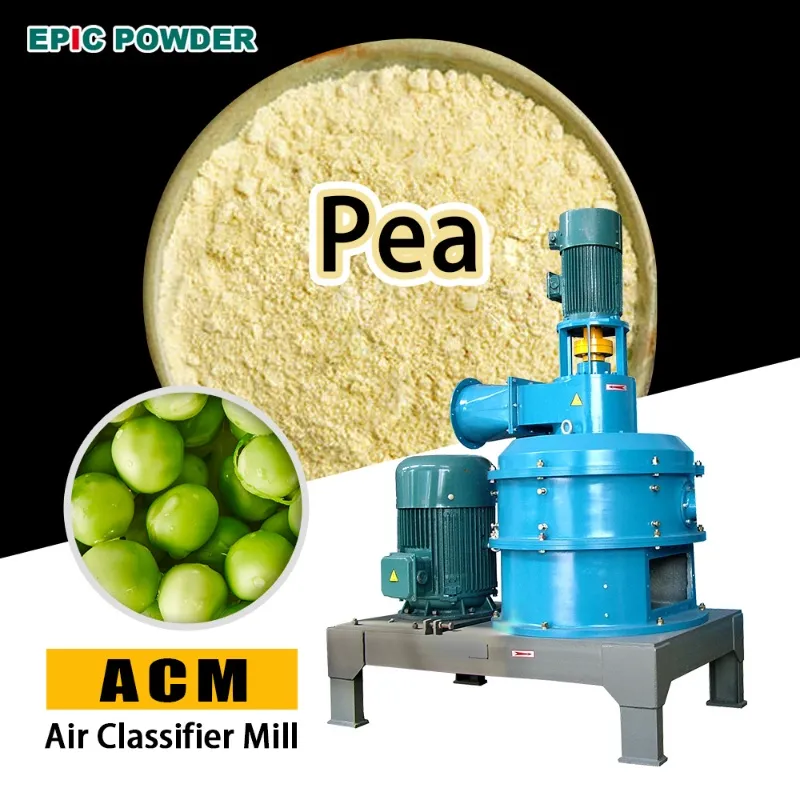
Causes of “Wall Adhesion” and “Temperature Rise” in Pea Protein Production
Why Is Pea Protein Prone to These Problems?
1. Causes of Wall Adhesion
Pea protein is a high-protein organic powder with the following characteristics:
- Contains residual fats and soluble sugars
- High surface energy, leading to strong interparticle adhesion
- Strong hygroscopicity and sensitivity to ambient humidity
During high-speed grinding, the powder is easily affected by static electricity, frictional heat, and localized moisture changes. As a result, particles tend to adhere to the grinding chamber, classifier wheel, or pipelines, causing wall build-up, material hanging, or even agglomeration.
2. Causes of Temperature Rise
Traditional mechanical grinding relies on intense mechanical shear and impact. As finer particle sizes are pursued:
- Specific energy consumption increases rapidly
- Frictional heat generation intensifies
- Local heat becomes difficult to dissipate
Proteins are highly sensitive to temperature. Excessive heat can lead to:
- Protein denaturation
- Reduced solubility
- Degradation of functional properties such as emulsification and foaming
Working Principle of the Air Classifier Mill
An air classifier mill combines impact grinding and dynamic air classification in a single unit. Its main components include a high-speed grinding rotor, a classifier wheel, an airflow system, and secondary air inlets.
Operating principle:
After entering the grinding chamber, the material is pulverized by high-speed impact and shear forces. At the same time, a large volume of cold air (or inert gas) carries the particles into the classification zone. Under the combined action of centrifugal force generated by the classifier wheel and airflow drag, fine particles (protein-rich) pass through the classifier and are collected, while coarse particles (starch-rich) are rejected and returned to the grinding zone for further size reduction. Secondary airflow further disperses the material and improves separation efficiency.
By adjusting classifier wheel speed, airflow rate, and feed rate, particle size can be precisely controlled (typically D50: 20–100 μm), enabling effective protein enrichment.
How the Air Classifier Mill Solves “Temperature Rise” and “Wall Adhesion”
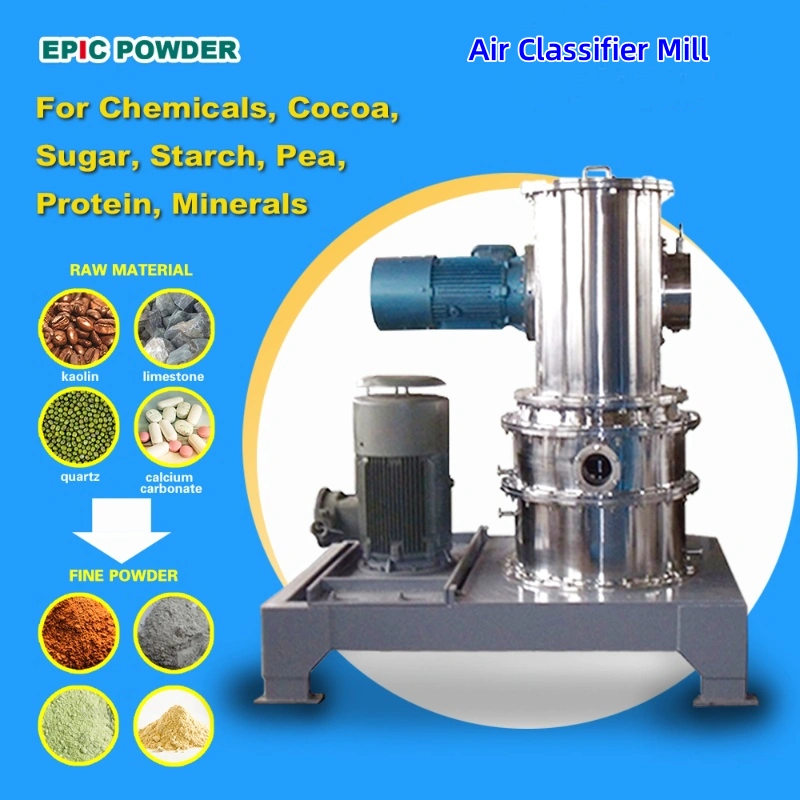
Solving the Temperature Rise Problem
- The air classifier mill uses a large volume of airflow as a cooling medium. A high air-to-material ratio allows frictional heat to be rapidly removed, keeping temperature increases minimal (typically near ambient temperature or below 30 °C). Compared with conventional mills, temperature rise is significantly reduced, preserving the natural functionality of pea protein (such as solubility, emulsification, and gelation).
- Low-temperature or inert gas circulation modes can be applied to further suppress thermal denaturation of heat-sensitive proteins and ensure retention of product activity.
- Studies show that in dry fractionation processes using air classifier mills, proteins largely remain in their native state, avoiding thermal damage.
Solving the Wall Adhesion Problem
- Strong airflow and secondary air washing continuously scour internal surfaces, dispersing potential agglomerates and preventing material buildup.
- Dead-zone-free designs, easy-to-disassemble structures, and smooth inner walls made of food-grade materials reduce static electricity and oil adhesion.
- Negative-pressure operation and efficient dispersion mechanisms allow material to pass quickly through the grinding zone, minimizing residence time and preventing sticking or caking, thereby improving continuous operation stability.
- Parameter optimization (such as increasing airflow) further enhances anti-sticking performance and avoids blockages commonly seen in traditional equipment.
In addition, the integrated design of the air classifier mill enables closed-circuit operation. Fine protein particles are separated promptly, avoiding repeated grinding that would otherwise generate additional heat and increase adhesion risk.
Application Advantages and Key Considerations
Air classifier mills are widely used in dry pea protein processing and can produce protein concentrates with 55%–80% protein content, or even higher purity products. Key advantages include:
- Low-temperature processing without protein denaturation, preserving functional properties
- High classification efficiency with high protein yield and uniform particle size
- Energy-efficient, environmentally friendly, and easy to clean, suitable for food-grade production
During operation, airflow rate and classifier speed should be optimized according to raw material properties such as moisture and oil content. If necessary, pre-drying or the use of anti-caking additives can further improve process stability.
Conclusion
With the rapid growth in demand for plant-based proteins, Qingdao Epic Powder Machinery (EPIC Powder)—a professional supplier of ultrafine powder processing equipment—has developed advanced air classifier mills (such as mechanical air classifier mills) featuring precise temperature control, anti-adhesion design, and high-accuracy classification. These systems have been successfully applied in multiple pea protein production facilities, enabling efficient, stable, and low-temperature processing while effectively overcoming wall adhesion and temperature rise challenges.
Choosing EPIC Powder’s air classifier mills supports pea protein producers in achieving high quality, energy efficiency, and sustainable production, paving the way toward a greener and more advanced future for plant protein processing.

“Thanks for reading. I hope my article helps. Please leave a comment down below. You may also contact Zelda online customer representative for any further inquiries.”
— Posted by Emily Chen