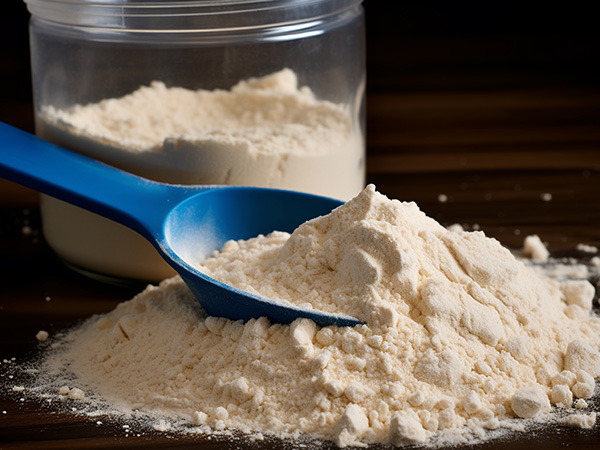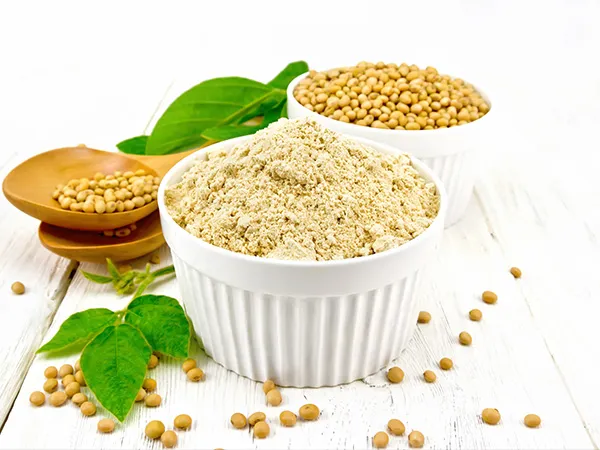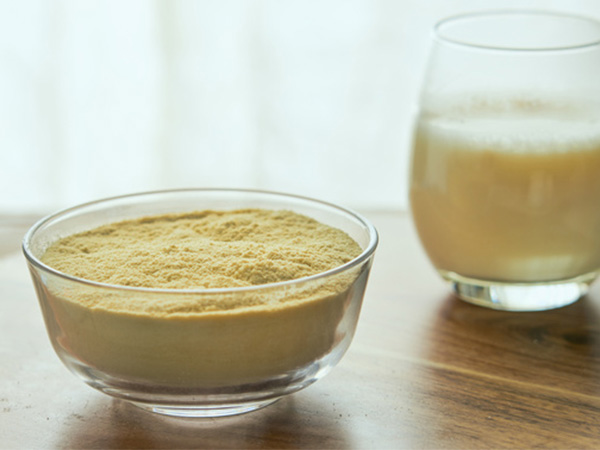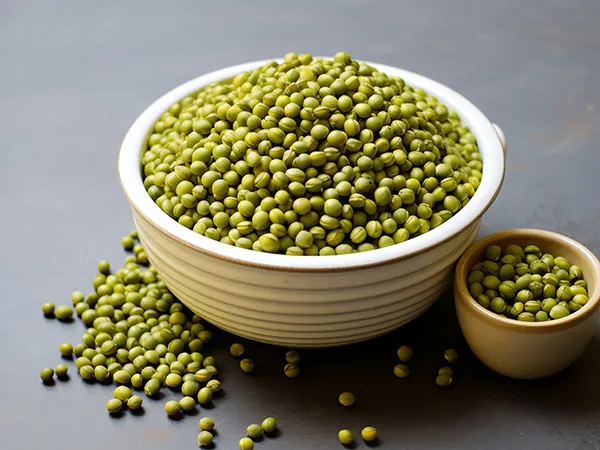
Pea protein isolate (PPI) is derived from yellow field peas. It is now a leading plant-based protein ingredient. This is driven by strong consumer demand for sustainable, allergen-friendly, and non-GMO alternatives to animal and soy proteins. PPI contains over 80-90% protein and a balanced amino acid profile rich in lysine. Consequently, it is widely used in meat analogs, beverages, baked goods, supplements, and dairy alternatives. Its functional properties—solubility, emulsification, foaming, and gelation—are critical for product quality.
However, PPI performance is highly dependent on particle size distribution (PSD). Inconsistent or broad PSD often causes poor dispersibility, clumping, reduced solubility, and processing issues such as dusting and poor flowability. Optimizing PSD is therefore essential to improve functionality, sensory attributes, production efficiency, and batch consistency.
Air Classifier Mill (ACM) technology is an effective solution for precise PSD control in PPI production. ACM technology integrates impact grinding and dynamic air classification in one unit. This allows it to achieve narrow, targeted particle size distributions. At the same time, it minimizes heat damage, energy use, and protein denaturation. These features offer clear advantages over conventional milling methods.
This article examines the principles of ACM technology and its application in pea protein processing. We will discuss key optimization strategies, functional benefits, and challenges. Lastly, we will explore future prospects in the rapidly growing plant-based protein market.
Understanding Pea Protein Isolate and the Importance of Particle Size Distribution
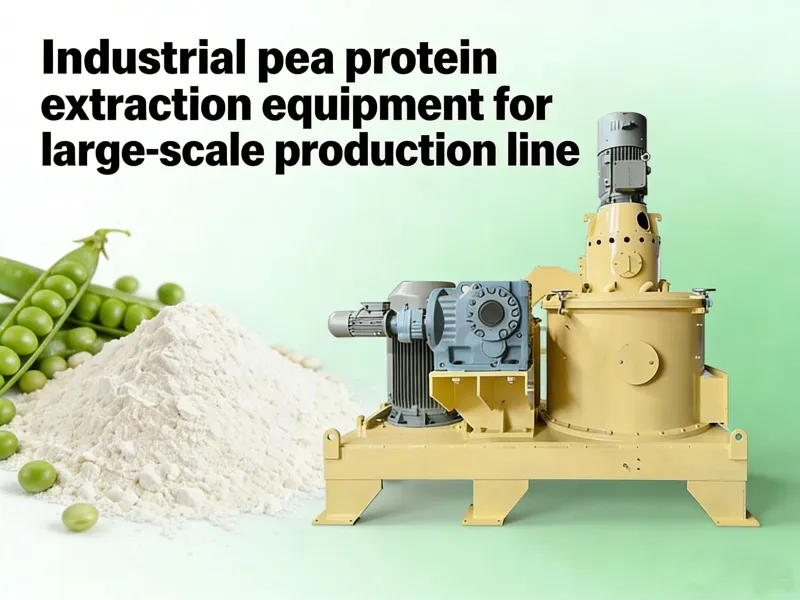
Pea protein isolate is typically produced through wet or dry fractionation methods. Wet processes (e.g., alkaline extraction followed by isoelectric precipitation) yield higher purity but are water- and energy-intensive. Dry fractionation, involving milling and air classification, is more sustainable and preserves native protein structures, though it often results in protein concentrates (50-60% protein) that may require further refinement into isolates.
Raw pea flour contains starch granules (larger, denser, ~20-40 μm), protein bodies (smaller, ~1-5 μm), and fiber components. Effective separation relies on differential particle sizes and densities. PSD directly impacts:
- Solubility and Dispersibility: Finer particles (e.g., D50 < 10-20 μm) increase surface area, enhancing protein-water interactions and solubility, which is often limited in commercial PPI (typically 20-50% at neutral pH).
- Emulsification and Foaming: Narrow PSD with sub-micron to low-micron particles improves interfacial activity, leading to stable emulsions and foams in beverages or meat analogs.
- Gelation and Texture: Optimized sizes promote uniform network formation during heating or acidification, affecting gel strength and water-holding capacity.
- Flowability and Processing: Broad PSD causes segregation, poor flow (high Hausner ratio), and dusting; targeted distributions improve handling in pneumatic conveying or mixing.
- Nutritional Bioavailability: Finer particles may enhance enzymatic accessibility, though excessive grinding can denature proteins or damage starch.
Studies on pea flour milling show that D50 values around 13-25 μm, followed by air classification, significantly improve protein enrichment (up to 58-61% in fine fractions). Too coarse particles hinder separation; overly fine ones (<10 μm) cause agglomeration, poor flow, and increased starch damage.
In PPI specifically, post-isolation grinding or classification refines the powder for end-use. Here, ACM excels by allowing controlled reduction and classification without excessive mechanical stress that could alter protein conformation.
Principles and Working Mechanism of Air Classifier Mill Technology
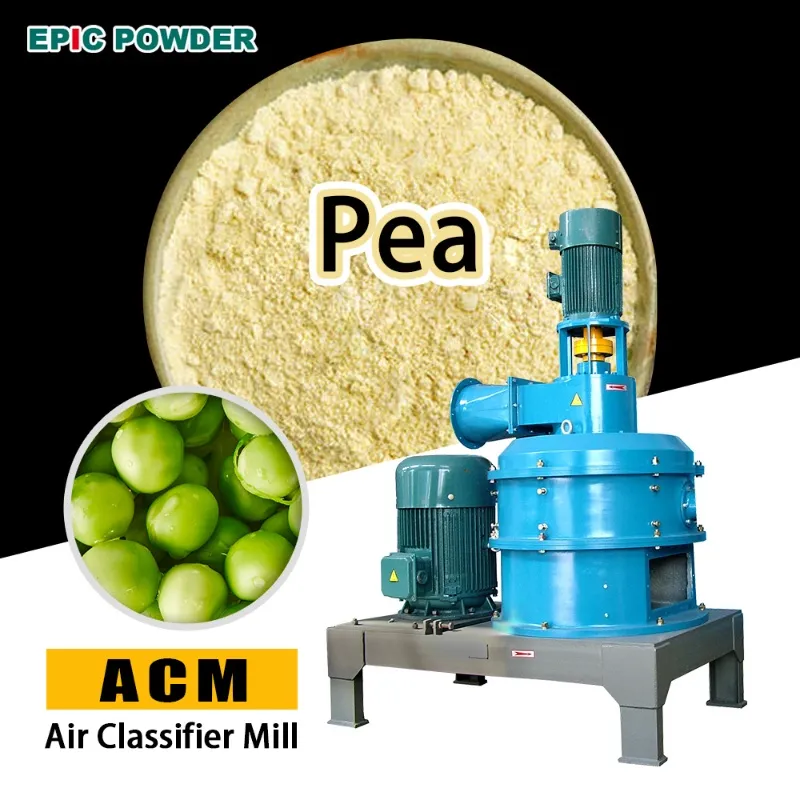
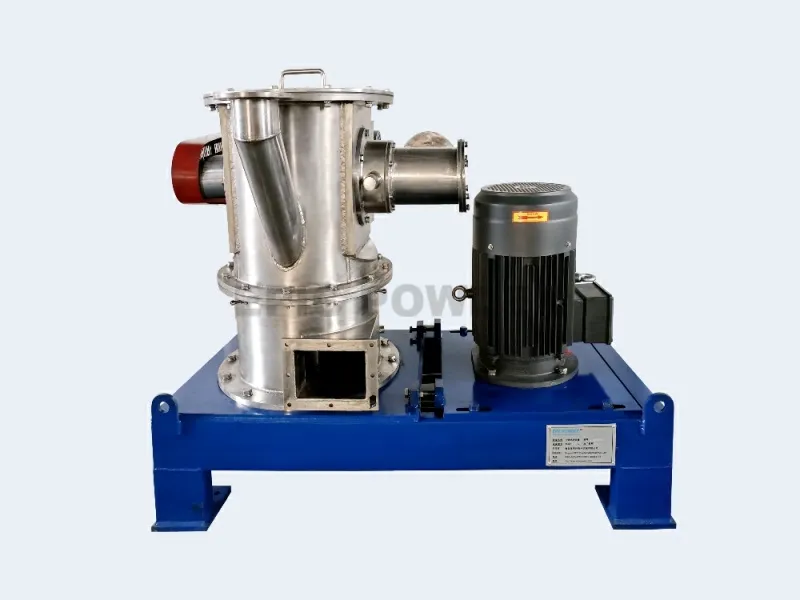
An Air Classifier Mill combines a high-speed impact rotor with an internal classifier wheel within a grinding chamber. The process unfolds as follows:
- Material Feeding: Pea protein powder or pre-milled flour is fed into the mill via a screw or vibratory feeder at a controlled rate.
- Impact Grinding: A rotating hammer or pin rotor (operating at high peripheral speeds, often 100-150 m/s) imparts kinetic energy through collisions, attrition, and shear. This breaks down aggregates and reduces particle size.
- Air Classification: Simultaneously, a classifier wheel (rotating at variable speeds, e.g., 2000-20,000+ rpm) generates centrifugal force. Airflow (introduced from the bottom or periphery) carries particles upward. Finer, lighter particles (lower mass) are entrained in the airstream and exit through the classifier as product. Coarser, heavier particles are flung outward by centrifugal force, fall back into the grinding zone for further reduction, and recirculate in a closed-loop system.
- Product Collection: Fine particles are separated from the air via cyclones or bag filters. The system maintains a dynamic equilibrium, preventing over-grinding.
Key advantages of ACM for PPI:
- Narrow PSD: Achieves tight distributions (e.g., Span value <1.5) compared to jet mills or hammer mills.
- Heat Management: High airflow dissipates frictional heat, preserving protein integrity (minimal denaturation).
- Contamination Control: Inert gas (nitrogen) options for sensitive materials; food-grade stainless steel construction.
- Efficiency: Single-pass or multi-pass operation with high throughput; energy savings by avoiding unnecessary grinding of fines.
- Versatility: Handles sticky, cohesive proteins by de-agglomeration.
Typical PSD targets for optimized PPI might include D10 <5 μm, D50 10-30 μm, D90 <50-80 μm, depending on application (e.g., finer for beverages, slightly coarser for extrusion).
Optimizing Particle Size Distribution with Air Classifier Mills for Pea Protein Isolate
Optimization involves balancing grinding intensity and classification parameters to achieve desired PSD while maximizing yield and functionality.
1. Key Process Parameters and Their Effects
- Classifier Wheel Speed: The most critical variable. Higher speeds (e.g., 8000-15,000 rpm) produce finer cut sizes (smaller D50) by increasing centrifugal force, allowing only very fine particles to escape. Lower speeds yield coarser distributions. For pea materials, optimal speeds around 4000-10,200 rpm have been reported for effective protein-starch separation in flours, with finer settings for isolate refinement. Excessive speed can cause build-up on vanes or agglomeration.
- Airflow Rate and Velocity: Higher airflow carries more particles out quickly, resulting in coarser product and higher throughput. Lower airflow increases residence time for finer grinding. Optimal balance prevents turbulence while ensuring dispersion.
- Rotor (Mill) Speed: Influences initial impact energy. Higher speeds enhance breakage of protein aggregates but risk heat generation if not balanced with airflow.
- Feed Rate: Low rates ensure uniform processing and narrow PSD; high rates overload the classifier, broadening distribution and reducing efficiency.
- Moisture Content: Critical for PPI (<8-10% ideal). Higher moisture causes caking, agglomeration, and poor classification. Pre-drying or conditioning is often necessary.
- Multiple Passes or Staging: Coarse fractions can be re-milled and re-classified for higher protein recovery and tighter PSD. Two- or three-stage processes improve yield without sacrificing purity.
Experimental approaches often use design of experiments (DoE), such as varying classifier speed and airflow, while monitoring laser diffraction PSD metrics (D10, D50, D90, Span = (D90-D10)/D50).
For instance, milling pea flour to D50 of 13-14 μm followed by classification at ~9600 rpm has yielded protein concentrates with enhanced enrichment. In ACM for isolates, similar tuning refines commercial PPI from broad distributions (D50 >100 μm) to sub-50 μm ranges with improved dispersibility.
2. Pre- and Post-Processing Integration
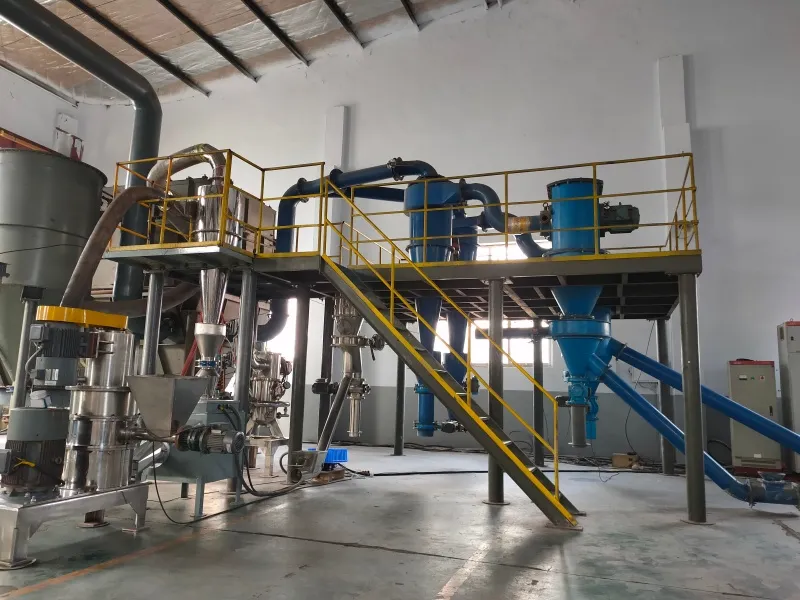
ACM is often integrated into full lines: dehulled peas → impact milling → initial air classification (for concentrates) → wet refining (if isolate) → drying → final ACM polishing for PSD optimization. Post-isolation, ACM de-agglomerates spray-dried PPI clusters.
Additives like flow aids (e.g., silicon dioxide) can reduce caking during fine milling, improving classification sharpness.
3. Monitoring and Characterization
Use laser particle size analyzers, scanning electron microscopy (SEM) for morphology, and functional tests (solubility, emulsifying activity index) to validate optimization. Rheological profiling of reconstituted PPI helps correlate PSD with application performance.
Benefits of Optimized PSD via ACM in Pea Protein Isolate
- Enhanced Functionality: Finer, narrow PSD increases surface hydrophobicity and charge in some cases, boosting solubility (up to significant improvements reported with media milling analogs) and emulsion stability. Gels show better water-holding capacity.
- Improved Processability: Better flow reduces bridging in hoppers; uniform particles minimize segregation in blends.
- Higher Yields and Sustainability: Closed-loop classification recycles oversize, reducing waste. Dry process lowers water use compared to wet methods.
- Sensory and Nutritional Advantages: Uniform particles reduce grittiness in foods; preserved native structure maintains digestibility.
- Cost Efficiency: Precise control reduces downstream sieving or reprocessing needs.
Case examples from pulse processing indicate protein separation efficiencies >50% with optimized ACM settings, with fine fractions showing concentrated bioactives alongside protein.
Challenges and Mitigation Strategies
- Agglomeration and Cohesion: Pea proteins can be sticky due to residual lipids or moisture. Mitigation: Control inlet moisture, use cooled air, or incorporate minor anti-caking agents.
- Heat Sensitivity: Though ACM manages heat well, sensitive isolates may require cryogenic or inert atmospheres.
- Scale-Up Issues: Lab parameters (e.g., small classifier) may not translate directly; pilot testing is essential. Classifier vane design and airflow dynamics affect sharpness of cut.
- Starch Damage or Protein Denaturation: Over-milling increases damaged starch or exposes hydrophobic cores. Optimize to balance fineness with integrity.
- Energy and Throughput Trade-offs: Finer PSD requires more energy; multi-parameter optimization via modeling helps.
- Regulatory and Safety: Ensure equipment meets food-grade standards (e.g., FDA, EU); control dust explosion risks with proper venting.
Research highlights that caking strength of milled flour inversely correlates with protein enrichment efficiency, underscoring the need for shape and size characterization (circularity, convexity via imaging).
Case Studies and Practical Insights
In dry fractionation studies, impact classifier mills (similar to ACM) at specific classifier speeds (e.g., 4000 rpm) optimized disentanglement of protein bodies from starch. This was achieved with minimal damage. For Australian pulses, including yellow pea, progressive fineness (D50 13-14 μm) at 9600 rpm maximized protein content (~58%) in fine fractions.
Industrial ACM lines for PPI mechanical processing emphasize top-mounted classifiers for precise D50 control. This enables tailored products for different applications, such as ultra-fine powders for high-solubility beverages.
Hybrid approaches—ACM combined with electrostatic separation or mild pH shifts—further refine PSD and purity.
Future Trends and Innovations
Advancements in ACM design include improved classifier geometries for sharper ultra-fine cuts (5-10 μm), AI-driven parameter optimization, and integration with inline sensors for real-time PSD feedback. Sustainable focuses involve energy-efficient motors and waste-heat recovery.
As demand for clean-label, high-functionality plant proteins grows, ACM technology will play a pivotal role in “protein shifting” — selectively enriching desirable fractions while minimizing environmental footprint. Research into multi-stage ultrafine classification and combination with non-thermal modifications (e.g., ultrasound post-milling) promises even better PSD control and performance.
Emerging applications may extend to personalized nutrition or precision fermentation synergies, where tailored PSD enhances bioavailability or encapsulation efficiency.
Conclusion
Optimizing particle size distribution for pea protein isolate using Air Classifier Mill technology represents a powerful convergence of mechanical engineering and food science. By leveraging the integrated grinding-classification mechanism, manufacturers can achieve narrow, application-specific PSDs. This approach unlocks superior functionality, processing efficiency, and product quality while aligning with sustainability goals.
Success hinges on systematic parameter tuning—classifier speed, airflow, feed rate, and material preconditioning—supported by robust characterization. While challenges like agglomeration exist, they are addressable through engineering refinements and process controls.
As the plant-based revolution accelerates, ACM-optimized PPI will continue to deliver versatile, high-performing ingredients that meet consumer expectations for taste, texture, and nutrition. Investment in this technology not only enhances current production but positions companies at the forefront of innovative, eco-friendly protein solutions. Future research and scale-up efforts will undoubtedly refine these processes further, broadening the horizons for pea protein and other pulse-derived ingredients in the global food system.

“Thanks for reading. I hope my article helps. Please leave a comment down below. You may also contact Zelda online customer representative for any further inquiries.”
— Posted by Emily Chen