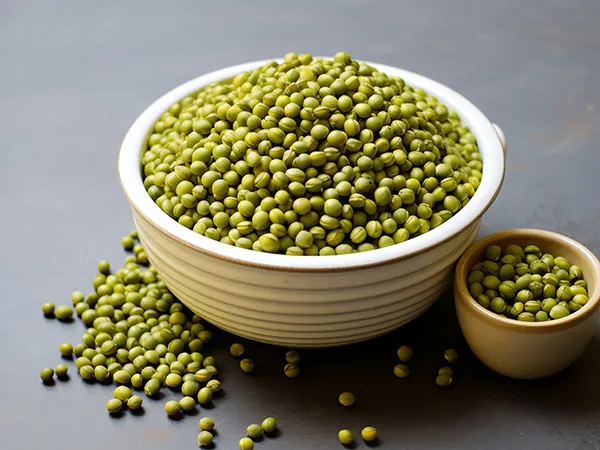
In today’s booming plant-based food and health industry, plant protein has become a global R&D focus in the food sector. Soy protein and pea protein have long been established in the market. Brown rice protein, as an emerging contender, is gaining increasing attention due to its natural advantages such as low allergenicity, balanced amino acid profile (rich in oligopeptides), and non-GMO characteristics. It is now becoming a core ingredient in infant formula, sports nutrition powders, and high-end meal replacement products.
However, brown rice protein has long faced a critical bottleneck in its applications—a rough, gritty texture. Furthermore, its dispersibility and solubility in water are extremely poor. How can this challenge be overcome?
The answer from the food engineering field is: ultrafine grinding technology. Among various ultrafine grinding equipment, the Air Classifying Mill is becoming a “breakthrough solution” in brown rice protein processing due to its unique “grinding + classification integration” design.

1. Processing Pain Points of Brown Rice Protein: Why Traditional Grinding Fails
To understand the breakthrough of the ACM classifying mill, we must first analyze why brown rice protein is so difficult to process.
After extraction and drying, brown rice protein usually exists as loose agglomerates. However, its matrix often still contains residual dietary fiber from brown rice and stubborn hydrophobic functional groups. When traditional mechanical grinding equipment (such as ordinary hammer mills or pin mills) is used, manufacturers typically face three major challenges:
“Sandy sensation” cannot be eliminated (uneven particle size distribution)
Traditional mills struggle to consistently control particle size below 20 microns (about 600 mesh). If oversized particles remain, consumers will feel a noticeable “scratching” or sandy sensation on the tongue and throat when drinking.
Heat-induced denaturation (gelatinization and caking)
Traditional grinding relies heavily on intense mechanical impact, generating significant friction heat. Brown rice protein is heat-sensitive. If the temperature inside the grinding chamber becomes too high, the protein will undergo thermal denaturation. This leads to a further precipitous drop in solubility, and may even cause it to stick to the chamber walls and agglomerate.
Over-grinding (energy waste)
To achieve finer particle sizes, traditional processes often extend grinding time, resulting in already-qualified fine particles being repeatedly ground (over-grinding). This not only damages the functional properties of the protein but also significantly increases power consumption.
Therefore, brown rice protein processing urgently requires a high-end physical processing system that can achieve ultra-fine grinding, precisely control particle size distribution, and provide cooling during grinding. This is the background for the emergence of the ACM classifying mill.
2. Core Working Principle of the ACM Mill: The Dual Power of “Grinding + Classification”
The ACM classifier mill can break this deadlock. The key reason lies in its integration of “high-efficiency mechanical impact grinding” and “centrifugal airflow classification” within a single sealed chamber.
Its working process and structure can be divided into the following key stages:
1. Impact Grinding Zone (Bottom)
The material is fed into the grinding chamber through a metered feeding system. At the bottom of the chamber is a high-speed rotating grinding disc, surrounded by wear-resistant liners. When the brown rice protein particles enter, they are subjected to high-speed impact from the hammers (or blades) on the grinding disc. Simultaneously, intense collisions and shearing occur between the liners, rapidly pulverizing them into micron-sized powder.
2. Airflow Ascending Zone
Driven by the exhaust fan at the back of the system, a powerful stream of cooling air enters the grinding chamber from the bottom. This airflow not only acts as a “carrier,” transporting the ground protein powder upward, but also serves as a “coolant,” removing most of the frictional heat generated during grinding.
3. Vortex Classification Zone (Top)
This is the “core soul” of the ACM classifying mill. At the upper part of the grinding chamber, an independently driven classifying impeller is installed.
When the airflow carrying mixed-size protein particles reaches the classification zone, it is subjected to two opposing forces:
- Suction force of the induced draft fan (inward/upward): attempts to pull all particles into the collection system.
- Centrifugal force of the high-speed rotating classifier wheel (outward/downward): attempts to reject particles back to the grinding zone.
By adjusting the rotational speed of the classifier wheel, the balance point between these two forces can be precisely controlled. Only sufficiently fine particles that meet the requirements can overcome centrifugal force, pass through the classifier blades, and enter the collection system. Larger particles are forced back into the grinding zone for further processing.

3. Why Is the ACM Mill a “Breakthrough Solution” for Brown Rice Protein?
Compared with other ultrafine grinding equipment such as jet mills and ball mills, the ACM classifying mill demonstrates four major technical advantages in processing brown rice protein:
1. Completely Eliminates “Sandy Sensation,” Creating a Silky Mouthfeel
The human tongue can perceive particle sensations at around 20–25 microns. The ACM grading mill, through fine-tuning the grading wheel speed, easily controls the average particle size (D50) of brown rice protein to below 10 micrometers or even 5 micrometers. This achieves an ultra-fine particle size of 1200-2500 mesh.
More importantly, due to its built-in precise grading function, its particle size distribution curve is extremely narrow (i.e., the particle size is very uniform). There are no large particles that are simply “filled in.” Brown rice protein powder processed by ACM melts in your mouth.
It completely eliminates the coarse texture of traditional plant proteins.
2. Built-in Air Cooling for Perfect Protein Activity Protection
As mentioned earlier, brown rice protein is heat-sensitive. During ACM operation, a large volume of air continuously passes through the grinding chamber. This strong airflow circulation provides excellent heat dissipation. This allows the temperature of the entire grinding process to be typically controlled at room temperature or slightly above 40°C.
This “cold processing” feature maximally preserves the biological activity, amino acid structure, and natural foaming and emulsifying properties of brown rice protein.
3. Significantly Improves Water Solubility and Dispersibility (Physical Modification)
This is a remarkable “physical morphological modification.” After ultrafine grinding by ACM, the specific surface area of brown rice protein increases exponentially. This means a dramatic increase in contact area between particles and water molecules.
More deeply, the strong shear force during ultrafine grinding can partially break the hydrogen bonds between protein molecules. This process exposes the hydrophilic groups that were previously hidden inside.
Without any chemical modifiers, this purely physical approach significantly slows down particle sedimentation in water. Consequently, it fundamentally improves the protein’s dispersibility, suspension stability, and apparent solubility.
4. Energy Saving and Cost Reduction, Suitable for Large-Scale Industrial B2B Production
Some may ask: doesn’t a jet mill also achieve ultrafine grinding?
Yes, but jet mills rely on high-pressure air, which consumes extremely high energy, making production costs too high for most food companies.
In contrast, the ACM classifying mill is a mechanical ultrafine grinding system. Under the same fineness level, its energy consumption per unit output is only about one-third to one-half of a jet mill’s. In addition, it integrates grinding and classification into a small footprint while supporting stable, continuous production. This combination makes it the ideal solution for large-scale, low-cost industrial production of brown rice protein.
4. Technology Implementation: How ACM Mill Empowers Brown Rice Protein Applications
Once the ACM classifying mill solves large-scale production bottlenecks, high-quality ultrafine brown rice protein unlocks a wide range of commercial applications:
High-end plant protein powder / vegan meal replacement
Ultrafinely ground brown rice protein can be used alone or blended with pea protein. It dissolves in warm water instantly, providing a smooth texture comparable to whey protein, making it an ideal choice for vegans and fitness enthusiasts.
Plant-based milk and functional beverages
Adding ultrafine brown rice protein to plant-based milk (such as oat milk or rice milk) not only enhances protein nutrition but also ensures no layering or sedimentation during shelf life, maintaining a fine and uniform texture.
Low-allergen infant complementary food
With GMP-standard hygienic design, ultrafine brown rice protein produced by ACM is extremely easy for infants to digest and absorb, with no risk of large particle choking.
5. Conclusion
In today’s food industry, which is moving toward refinement and health-oriented development, the rise of brown rice protein is inevitable. However, high-quality raw materials require equally advanced processing technologies.
With its distinct advantages—integrated grinding and classification, precise particle size control, low temperature rise, and low energy consumption—the ACM classifying mill precisely addresses every key processing pain point. It is far more than a grinding machine. Instead, it serves as a technological bridge that connects “coarse natural raw materials” to “silky high-end food products.”
It fully deserves the title of the “breakthrough solution” in the field of brown rice protein ultrafine grinding. With further adoption of this technology, more high-quality, delicious, and smooth-textured brown rice protein food products will appear on our tables in the future.

“Thanks for reading. I hope my article helps. Please leave a comment down below. You may also contact Zelda online customer representative for any further inquiries.”
— Posted by Emily Chen