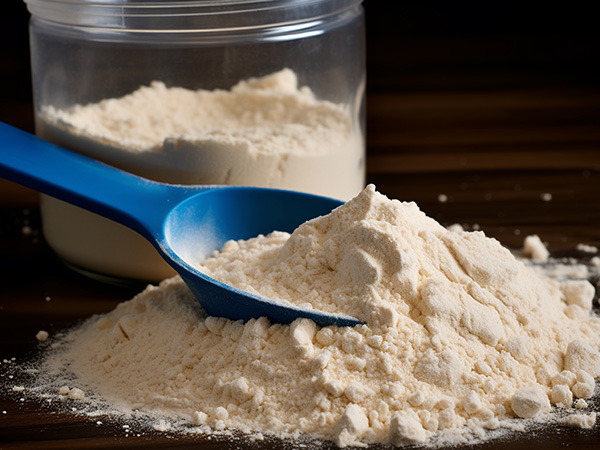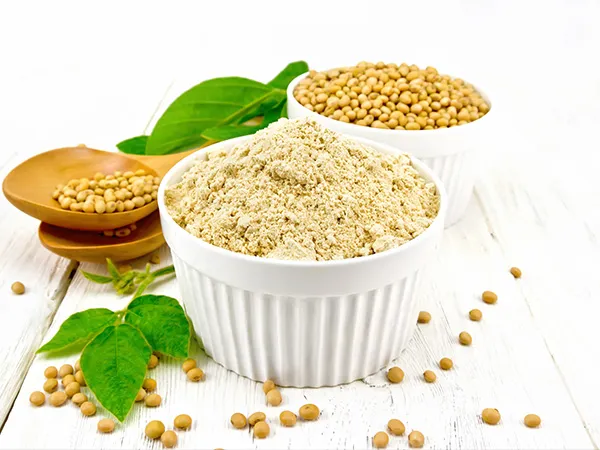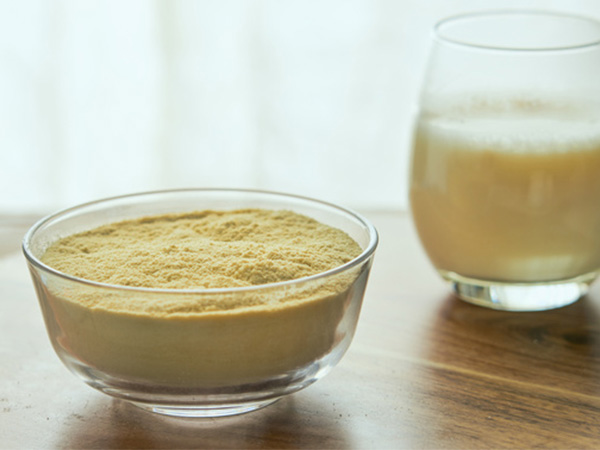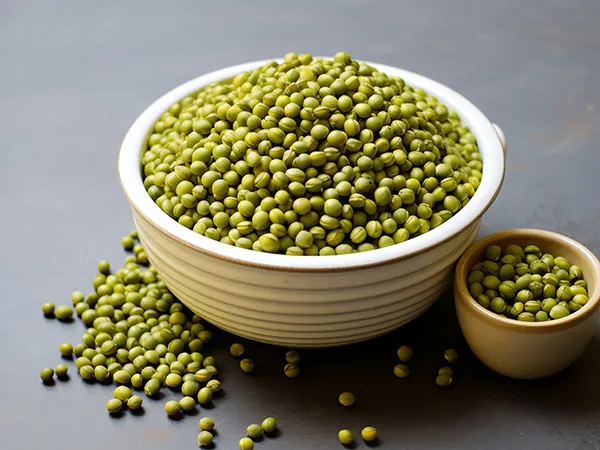
The global demand for plant-based proteins, alternative dairy, and gluten-free baking components has skyrocketed over recent years. At the center of this ingredient revolution is the humble yellow pea. Rich in lysine, highly digestible, and hypoallergenic, yellow peas have become the gold standard for clean-label food formulations. However, transforming whole yellow peas into high-value food ingredients or concentrated protein isolates is a major technical challenge. The success of a yellow pea processing plant depends entirely on its size-reduction stage. If you are currently browsing the market for a high-efficiency pea grinder, you have likely realized that standard crushers simply won’t cut it.
Choosing the right milling equipment for yellow peas requires a deep understanding of the material’s physical properties, processing thermodynamics, and the target application of your final product. This comprehensive guide analyzes the unique milling characteristics of yellow peas. It evaluates industry-leading commercial milling technologies and provides five key selection criteria to help you pinpoint pharmaceutical/food-grade industrial solutions.
Understanding Yellow Pea Grinding Characteristics
To select the ideal commercial food grinder machinery, one must first understand the enemy—or in this case, the complexity of the raw material. Yellow peas are structurally complex, comprising a fibrous outer hull, a dense starch matrix, and highly sensitive internal protein fractions.
When configuring an industrial pea flour grinder, processors generally face three unique biological hurdles:
High Protein Content & Thermal Sensitivity
Yellow peas contain roughly 20% to 25% inherent protein, which can exceed 80% after fractionation. Proteins are highly sensitive to heat. Traditional mechanical grinding creates intense friction inside the milling chamber. If the temperature crosses a critical threshold (typically above 50°C to 60°C), the proteins begin to denature. Denatured pea protein loses its solubility, foaming capabilities, and emulsification properties, rendering it useless for premium food manufacturing.
Elastic Fiber and Dense Starch Structures
The outer hull of the yellow pea is packed with tough, elastic cellulose fibers. Conversely, the cotyledon consists of rigid, tightly bound starch granules. To achieve a smooth, premium mouthfeel, an industrial grinder must exert a combination of high-speed impact and intense shearing forces. Without sufficient shear, the fibrous hulls remain intact as coarse flakes, compromising the uniform texture of the flour.
Moisture and Fat-Induced Clogging
While yellow peas are relatively low in oil compared to soybeans, they still contain about 1.5% to 2% lipids alongside significant starches. When subjected to the heat of continuous milling, these fats and starches can form a sticky paste. If the internal aerodynamics of your milling machine are poorly designed, this paste will rapidly blind screens, coat internal rotors, and trigger catastrophic system blockages.
Milling Equipment for Yellow Peas
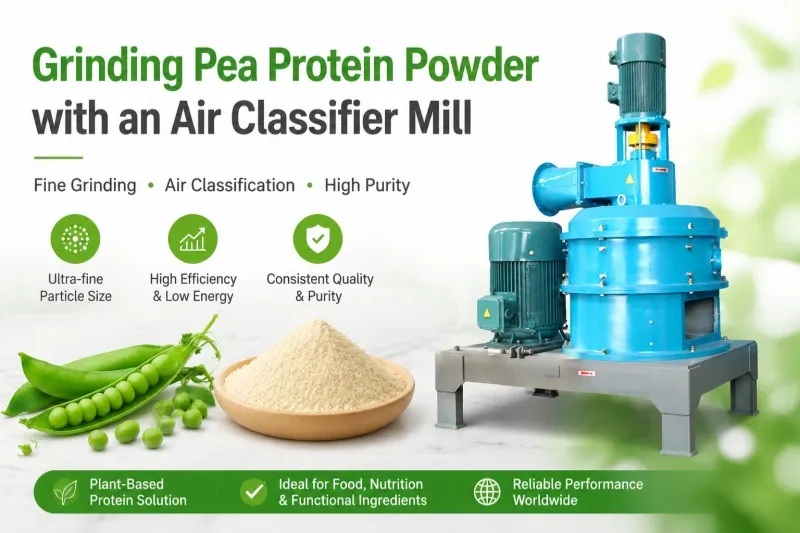
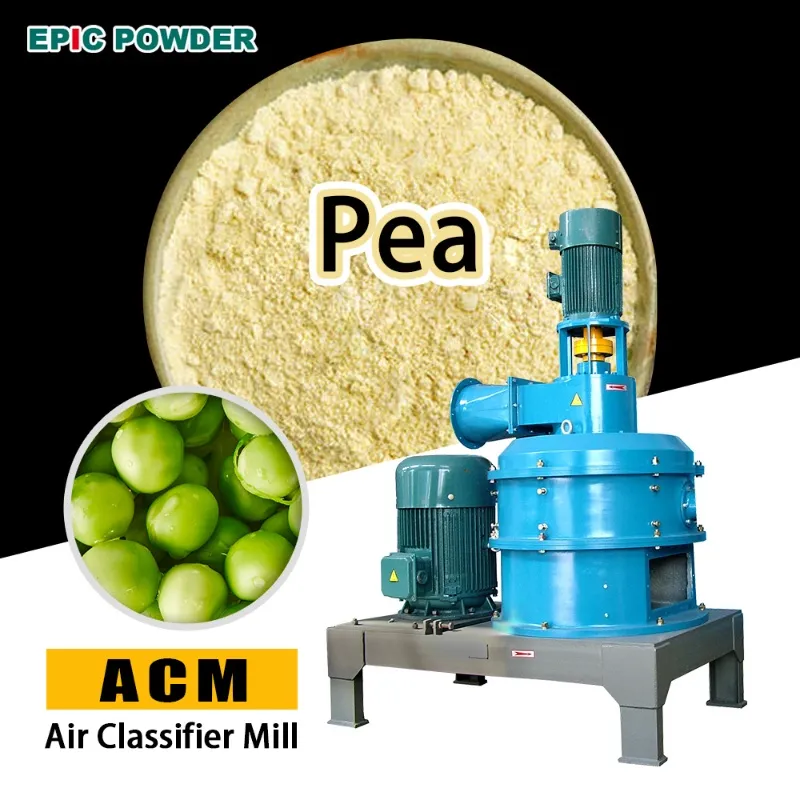
Air Classifying Mills (ACM): The Ultimate Solution for Premium Processing
For high-end food ingredients and protein isolation, the air classifying mill for peas stands as the absolute industry standard. This system integrates an ultra-high-speed impact rotor with an independently driven internal dynamic classifier wheel.
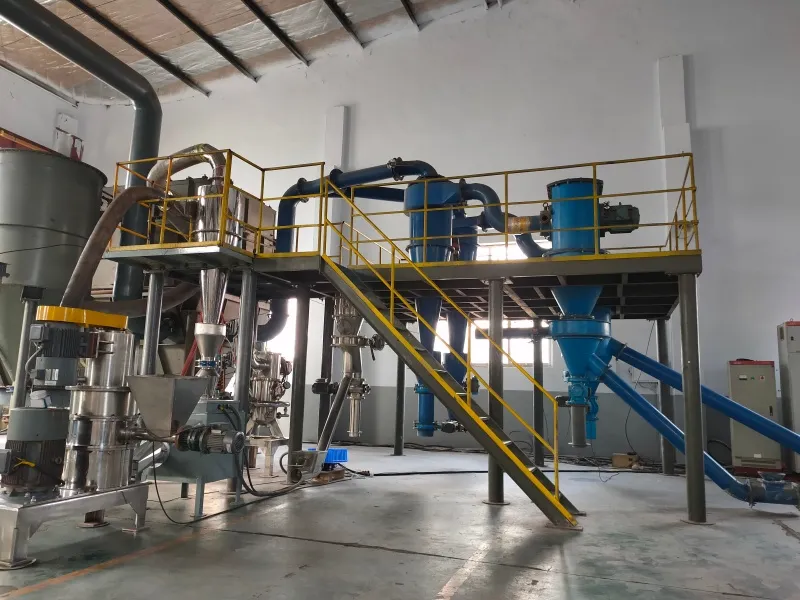
- The Pros: The ACM operates entirely under a powerful negative pressure airflow. A continuous stream of ambient or chilled air enters the mill with the raw material, keeping the processing zone exceptionally cool. The internal dynamic classifier continuously returns oversized particles to the grinding zone while allowing perfectly sized micro-particles to pass into the collection cyclone. This achieves an ultra-fine, narrow particle size distribution (up to 325 mesh or higher) without screen blinding.
- The Cons: Air classifying mill systems represent a higher initial capital expenditure and feature a larger overall factory footprint due to integrated cyclones, pulse dust collectors, and heavy-duty system fans.
Five Key Factors to Consider When Choosing a Pea Grinder
To maximize your return on investment and select a milling system that seamlessly accommodates your specific production roadmap, evaluate equipment suppliers using these five essential criteria:
1. Target Particle Size and Application
Before speaking with a machinery vendor, establish exactly what your end product is. Are you producing a standard, fiber-inclusive whole pea flour for gluten-free baking, or are you preparing raw material for dry protein fractionation?
- For baking and snacks: A standard 80 to 120-mesh powder is usually sufficient. A high-quality pin mill or fine-screen hammer mill will deliver cost-effective results.
- For dry protein fractionation: You require ultra-fine particle sizes, generally in the range of D50: 3 ~ 8μm . At this scale, the starch granules must be completely detached from the protein matrices without being mechanically damaged. This precision requires an advanced air classifying mill line.
2. Temperature Management and Cooling Capabilities
Given the thermal sensitivity of yellow pea protein, evaluate how well the system mitigates heat. Look for equipment configurations that support:
- Water-cooling jackets: Dual-wall processing chambers that circulate chilled water around the stator to absorb radiant friction heat.
- High air-to-material ratios: Systems that use high-volume airflow to carry particles through the mill, minimizing the residence time of the material in the high-heat milling chamber.
- Dehumidified air integration: For plants located in humid climates, the integration of a chilled, dry air unit at the main air inlet prevents the starches from absorbing atmospheric moisture and gumming up the machinery.
3. Production Capacity and Scalability
Your machinery selection should realign with your market strategy. For small-batch regional testing or high-mix low-volume boutique production, a compact, manually fed system with a throughput of 100 ~300 kg/h is sufficient. However, if you are looking to scale up to an international commercial tier, choose heavy-duty systems that comfortably process 1 ~5t/h continuously without suffering mechanical fatigue or particle drift over extended operational shifts.
4. Wear Resistance, Food Safety, and Maintenance
Industrial food production leaves no room for sanitation compromises or unexpected component failures.
- Material Construction: Ensure all product contact parts are made from food-grade Stainless Steel (SUS304 or SUS316L) to prevent corrosion and satisfy international food safety regulations.
- Abrasion Resistance: Yellow pea hulls can be surprisingly abrasive over long production campaigns. Ensure the primary impact elements (beaters, pins, or liners) are treated with specialized tungsten carbide coatings or made from hardened alloys to minimize wear and prevent metal contamination in your flour.
- Quick-Clean Designs: Look for systems that feature tool-less access doors or top-opening hinges, allowing your sanitation crew to rapidly wash down or vacuum the internal components during recipe or batch changes.
5. Automation and PLC System Integration
Modern processing facilities rely on strict data repeatability. Opt for a pea grinder system integrated with a centralized PLC (Programmable Logic Controller) panel. A smart automation suite allows operators to continuously monitor and adjust critical variables, including:
- Main rotor RPM and classifier wheel RPM.
- Real-time temperature readouts at the milling zone and exhaust ducts.
- System pressure variances (differential pressure across the bag filter).
- Amperage loads on feeding screws to automatically prevent system overfeeding.
Frequently Asked Questions (FAQs)
Q1: What is the ideal mesh size for yellow pea flour, and which grinder can achieve it?
Answer: The ideal mesh size depends completely on your intended downstream application. For standard baking components, texturized vegetable proteins (TVP), or general food thickeners, a mesh size of 125 – 180μm) is ideal. This particle distribution can be easily achieved using premium industrial pin mills or optimized hammer mills.
However, if your facility is performing dry air fractionation to extract high-purity pea protein concentrates or isolates, the peas must be micronized down to an ultra-fine range of 325 to 400 mesh (30 -45μm, with a D50 often below 10μm). This ultra-fine threshold is necessary to break the cellular bonds between starch granules and protein bodies. For this specialized application, an air classifier (ACM) is essential. It provides the required micron-level precision and low-temperature environment for safe extraction of protein components without physical or thermal damage.
Q2: How do you prevent clogging and heat buildup when grinding yellow peas?
Answer: Eliminating clogging and heat generation when operating a yellow pea processing plant relies on three core engineering pillars:
- High-Volume Negative Pressure Airflow: A pneumatic conveying design (e.g., in an airflow classification system) ensures a continuous flow of high volume air through the grinding chamber. This air acts as an active coolant, instantly removing heat generated by mechanical friction. It also rapidly removes the pea particles from the grinder before they become denatured due to heat.
- Chilled Water-Cooling Jackets: Equipping your commercial food grinder machinery with an integrated cooling jacket allows for the continuous circulation of chilled water (5°C- 10°C) around the milling stator. This maintains internal wall temperatures well below the starch gelatinization and protein denaturation limits.
- Strict Raw Material Moisture Control: Before feeding yellow peas into any fine industrial pea flour mill, ensure the raw seed moisture content is uniformly stabilized below 12% to 14%. If the moisture content is too high, the heat of the mill will activate the starches, turning the material into a sticky dough. This sticky mass will instantly blind screens and choke the system.
Conclusion
Selecting the “best” pea grinder is not about finding the most expensive piece of machinery on the market. It is about choosing the precise engineering design.
The design should match your target flour metrics, protein preservation needs, and long-term production budget. Whether you require a rugged hammer mill for introductory grinding, or a highly sophisticated air classifying mill for ultra-fine protein isolation, the choice depends on your application. Proper planning upfront will save your facility thousands of dollars. It reduces maintenance costs and energy consumption.
Are you ready to take your yellow pea processing plant to the next level?
Our specialized engineering team is here to help. Contact our industrial powder processing experts today. Discuss your target specifications with our team. Request a detailed line layout. Or schedule a free trial run using your raw materials at our state-of-the-art testing facility.

“Thanks for reading. I hope my article helps. Please leave a comment down below. You may also contact Zelda online customer representative for any further inquiries.”
— Posted by Emily Chen