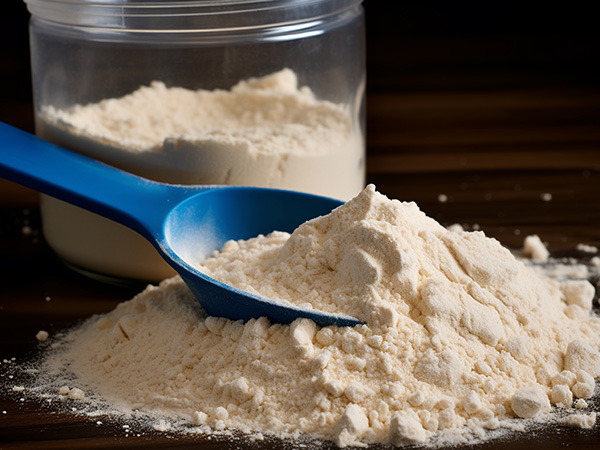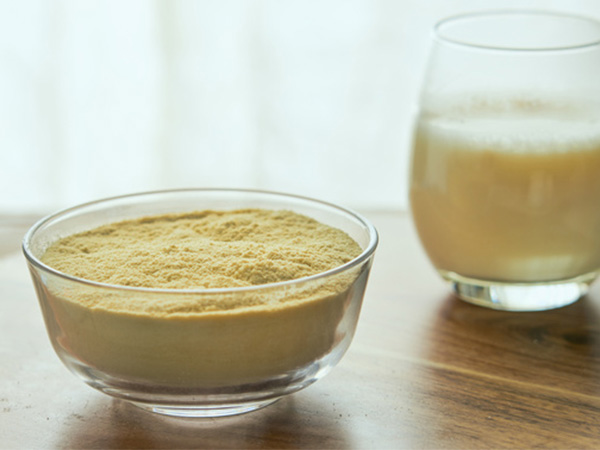
In modern food processing, cassava powder is an important carbohydrate-based ingredient and is widely used in baking, desserts, glass noodles, mochi, taro balls, and many other products. Its distinctive chewy (Q-elastic) texture and high transparency are highly favored by consumers. However, many people notice a slight “grainy” or gritty sensation when eating cassava-based products, which negatively affects the overall mouthfeel.
To achieve a true “zero grainy texture”—that is, a powder that is extremely fine, smooth, melts instantly in the mouth, and contains no coarse particles—the key lies in ultrafine particle size and excellent uniformity. The air classifier mill is precisely the core technology that makes this possible.

What Is “Grainy Texture” and What Causes It?
The main component of Cassava powder originates from cassava roots. Traditional processing methods typically involve mechanical grinding followed by wet extraction and drying. The resulting product usually has particle sizes ranging from several tens to hundreds of micrometers. If the particle size is too large or the size distribution is uneven, coarse particles cannot fully swell or disperse during dissolution, gelatinization, or consumption. As a result, the product develops a rough, sandy mouthfeel.
This issue is especially noticeable in products such as mochi, pudding, bubble tea pearls, and thickened sauces. In these applications, coarse particles prevent the formation of a smooth and delicate texture.
To eliminate graininess, cassava powder must be processed to an ultrafine level. Typically, the particle size should reach D97 ≤ 10–20 μm, or even finer. At the same time, a very narrow particle size distribution is essential to ensure that no large particles remain. Only under these conditions can the powder hydrate and gelatinize rapidly and uniformly when heated in water. This allows it to form a transparent, elastic, and particle-free gel structure.
Working Principle of the Air Classifier Mill
An air classifier mill is a dry ultrafine grinding system that integrates jet milling and precision classification. Its core principles include:
- High-pressure air jet grinding
Compressed air is accelerated to supersonic speed through Laval nozzles. Particles collide, rub, and shear against each other inside the grinding chamber, achieving self-grinding. Unlike traditional mechanical mills, particle–particle collision dominates, resulting in almost no metal contamination and very low temperature rise—ideal for heat-sensitive materials such as Cassava powder. - Precision classification
After grinding, particles are carried upward by airflow into the classification zone. A high-speed rotating classifier wheel generates a strong centrifugal force field. Fine particles that meet the size requirement pass through the classifier and are collected, while coarse particles are thrown back into the grinding zone for further size reduction. Classification accuracy is extremely high, achieving D97 < 2–10 μm with a very narrow size distribution and no leakage of coarse particles. - Closed-circuit operation
Coarse particles automatically return for regrinding, ensuring a consistently uniform and ultrafine final product.
Advantages of the Air Classifier Mill
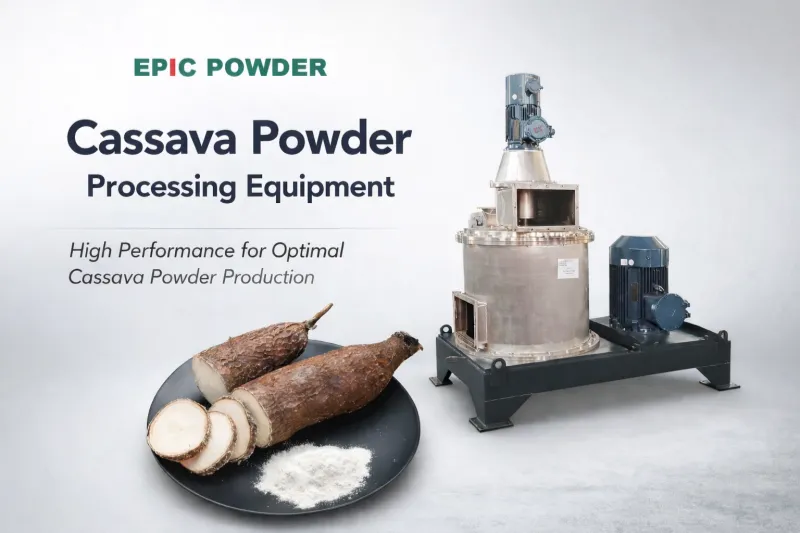
Compared with traditional hammer mills, ball mills, or roller mills, air classifier mills offer significant advantages:
- Outstanding ultrafine grinding capability
Cassava powder can be easily processed down to submicron sizes, far beyond the limits of conventional equipment. - Precise particle size control
By adjusting classifier wheel speed, airflow, and other parameters, a narrow size distribution can be achieved, eliminating coarse particle residue. - Low temperature and contamination-free processing
Minimal heat buildup preserves the natural flavor and functional properties of Cassava powder. Ceramic linings or inert gas protection further ensure food-grade purity. - High efficiency and energy savings
Self-collision grinding results in low equipment wear, making it suitable for strict food-grade applications.
In practical production, many manufacturers use air classifier mills to perform secondary ultrafine processing of imported or domestically produced coarse Cassava powder specifically to improve mouthfeel. In products such as mochi premixes or high-end baking powders, ultrafine cassava powder delivers an exceptionally smooth, grain-free eating experience.
The Key Role of Air Classifier Mills in Cassava Powder Grinding
Traditional cassava powder processing typically stops at coarse grinding, making it difficult to achieve a true “zero grainy texture.” The introduction of air classifier mills marks a major upgrade—from “coarse powder” to “ultrafine functional powder”:
- Enhanced hydration and gelatinization performance
Ultrafine Cassava powder particles have a larger specific surface area, allowing faster water absorption and swelling to form a uniform gel without residual particles. - Improved product texture
In taro balls, pearls, or glass noodles, the texture becomes more elastic and transparent. In thickened soups and sauces, the liquid becomes smoother and does not settle. - Expanded applications
Ultrafine Cassava powder can be used as a filler in silicone sealants, as a cosmetic base material, or as a premium gluten-free baking ingredient, creating significant market opportunities.
As consumer expectations for food texture continue to rise, air classifier mills have become a standard technology for deep processing of Cassava powder. They not only eliminate graininess but also drive the industry’s transition from low-end coarse processing to high-end, refined production.
Conclusion
With its unique capabilities in ultrafine grinding and precision classification, the air classifier mill directly determines whether Cassava powder can achieve a true “zero grainy texture.” This technology transforms ordinary cassava powder into a high-end functional ingredient, delivering an ultra-smooth, elastic, and premium eating experience. In the future, as equipment localization and cost optimization progress, more high-quality ultrafine cassava powder products will enter everyday kitchens—making delicious foods even more refined and enjoyable.

“Thanks for reading. I hope my article helps. Please leave a comment down below. You may also contact Zelda online customer representative for any further inquiries.”
— Posted by Emily Chen