1. Texture Challenges in Plant-Based Dairy and the Role of Soy Protein Isolate
With the growing popularity of healthy diets and increasing environmental awareness, the plant-based dairy market is experiencing explosive growth. However, compared with traditional animal-based dairy products, plant-based alternatives often suffer from issues such as rough mouthfeel, strong graininess, and unbalanced flavor. These shortcomings have become a key bottleneck restricting further development of the industry.
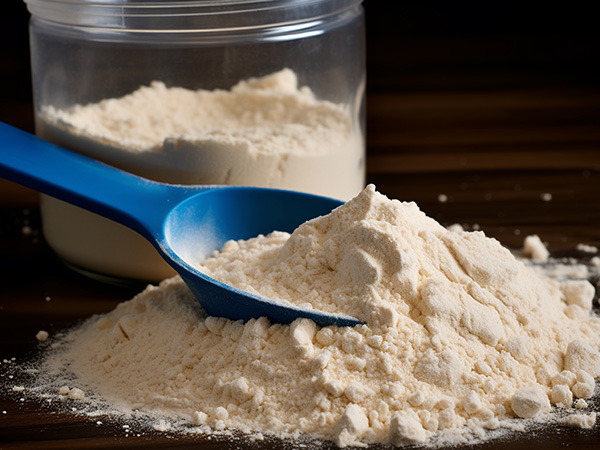
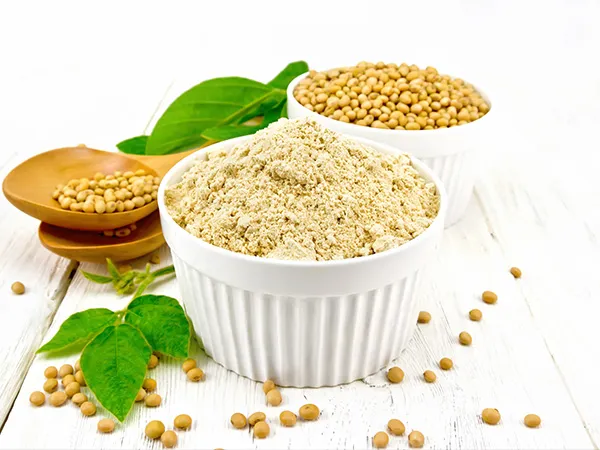
Soy Protein Isolate (SPI), due to its high nutritional value, favorable functional properties, and relatively low cost, has become one of the most widely used raw materials in plant-based dairy production. However, untreated SPI has poor solubility and weak dispersibility. It tends to form lumps when mixed with water, which leads to an unpleasant mouthfeel and makes it difficult to meet consumers’ expectations for high-quality plant-based dairy products.
The functional properties of SPI are closely related to its particle size and structure. Studies show that particle size distribution, surface hydrophobicity, and molecular structure directly influence its solubility, dispersion, and emulsification performance in liquid systems. Traditional SPI particles usually range from tens of micrometers to even hundreds of micrometers. Such large particles produce a noticeable rough sensation in the mouth. They also hinder interactions between protein and other components, resulting in decreased stability of the product system.
Therefore, improving the functional properties of SPI and enhancing the taste and quality of plant-based dairy products has become an urgent challenge for the industry.
2. Principles and Processes of Soy Protein Isolate Micronization Technology
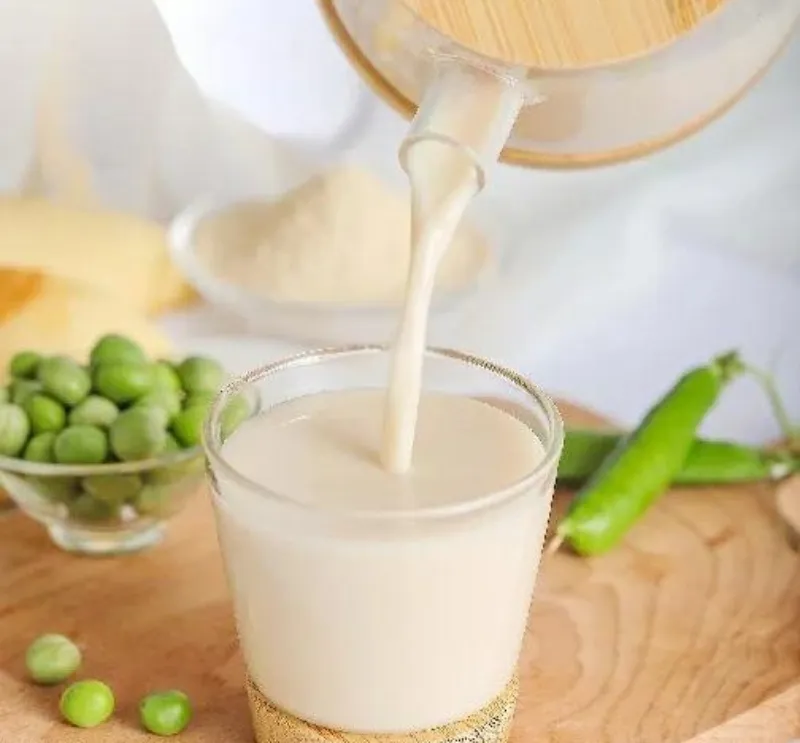
Micronization is a processing technology that reduces material particles to the micrometer or even nanometer scale through physical or chemical methods. For SPI, micronization significantly reduces particle size, increases specific surface area, and alters protein molecular structure, thereby improving functional properties.
Common micronization methods include physical treatment, chemical modification, and enzymatic hydrolysis. Among them, ultrafine grinding—one of the physical methods—is the most widely used in industrial production because of its simple operation, relatively low cost, and minimal impact on protein nutritional value.
Ultrafine grinding uses mechanical forces such as impact, shear, and grinding to break SPI particles into ultrafine powder. During this process, strong mechanical forces alter the protein structure. The 7S and 11S protein subunits are disrupted, β-sheet and β-turn structures decrease, while α-helix and random coil structures increase. These structural changes improve protein solubility and surface hydrophobicity. At the same time, ultrafine grinding produces a more uniform particle size distribution, reducing large particles and improving dispersibility and stability in liquid systems.
To achieve optimal micronization results, process parameters must be carefully controlled. In SPI production, mechanical milling is commonly used, with particle sizes typically controlled between 53 μm and 75 μm. Generally, more than 95% of particles pass through a 200-mesh sieve and about 90% pass through a 270-mesh sieve. Factors such as temperature, humidity, and feeding rate during grinding also influence the final results and must be adjusted according to production conditions.
In addition to ultrafine grinding, other modification techniques—such as high-pressure homogenization, ultrasonic treatment, and enzymatic hydrolysis—can be combined to further improve SPI functionality. For example, moderate protein hydrolysis (about 1–3% degree of hydrolysis) can further reduce particle size after micronization and improve gel properties and rheological behavior.
3. Functional Advantages of Micronized Soy Protein Isolate in Plant-Based Dairy Products
Micronized SPI demonstrates significant functional advantages in plant-based dairy products. These advantages are mainly reflected in the following aspects.
(1) Improved Solubility and Dispersibility
Untreated SPI tends to form lumps in water and is difficult to disperse uniformly, resulting in a rough texture in the final product. After micronization, the particle size of SPI is significantly reduced. The specific surface area increases, and surface hydrophobicity is enhanced.
As a result, the particles can quickly interact with water molecules. They dissolve and disperse rapidly in water, which reduces the formation of lumps.
Studies show that the sedimentation rate of micronized SPI can be reduced to below 85%. The resulting emulsion shows no phase separation even after standing for 30 minutes, indicating excellent stability.
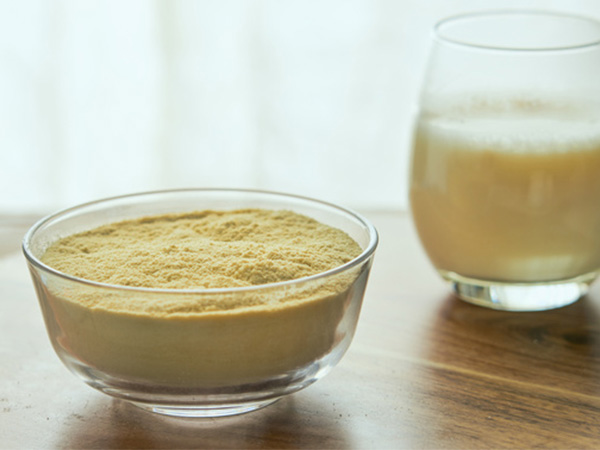
In the production of plant-based milk, the use of micronized SPI helps create a more stable product system. It also produces a smoother mouthfeel and avoids graininess or sedimentation caused by uneven protein dispersion.
(2) Improved Texture and Flavor
Micronization produces finer protein particles, which significantly reduces the rough sensation in the mouth. This gives plant-based dairy products a smoother and more pleasant texture.
At the same time, micronization alters the protein molecular structure. It reduces the number of binding sites between proteins and flavor compounds. This decreases the protein’s ability to absorb undesirable flavors, thereby improving the overall taste of the product.
Micronized SPI can also interact more effectively with other ingredients. It forms a more uniform network structure within the product system, improving texture and mouthfeel.
For example, in plant-based yogurt production, micronized SPI can interact more effectively with probiotics. It forms a denser gel network, giving the product a richer mouthfeel and better chewiness.
(3) Enhanced Gelation and Emulsification Properties
In fermented plant-based products, gelation properties play a crucial role in determining product texture and mouthfeel. Micronization disrupts the molecular structure of SPI. This allows the protein to form a more uniform gel network under acidic conditions.
As a result, gel strength and stability are improved.
Research indicates that combining moderate micronization with enzymatic hydrolysis can further optimize gel uniformity and rheological properties. This approach also helps avoid the decrease in gel strength caused by excessive hydrolysis.
In addition, micronized SPI exhibits excellent emulsifying properties. It can stabilize oil-containing systems and enhance juiciness and chewiness in products.
In plant-based cream, ice cream, and similar products, micronized SPI can function as an emulsifier. It allows oil and water phases to mix more effectively, forming a stable emulsion system. This provides the product with a finer texture and better shape retention.
(4) Improved Digestibility and Nutrient Absorption
After micronization, SPI particles become smaller and their specific surface area increases. This enlarges the contact area between the protein and digestive enzymes.
As a result, the protein is more easily broken down by digestive enzymes. This improves digestibility and bioavailability.
For consumers, plant-based dairy products containing micronized SPI allow more efficient absorption of nutrients, helping meet dietary nutritional needs.
4. Application Cases of Micronized Soy Protein Isolate in Plant-Based Dairy Products
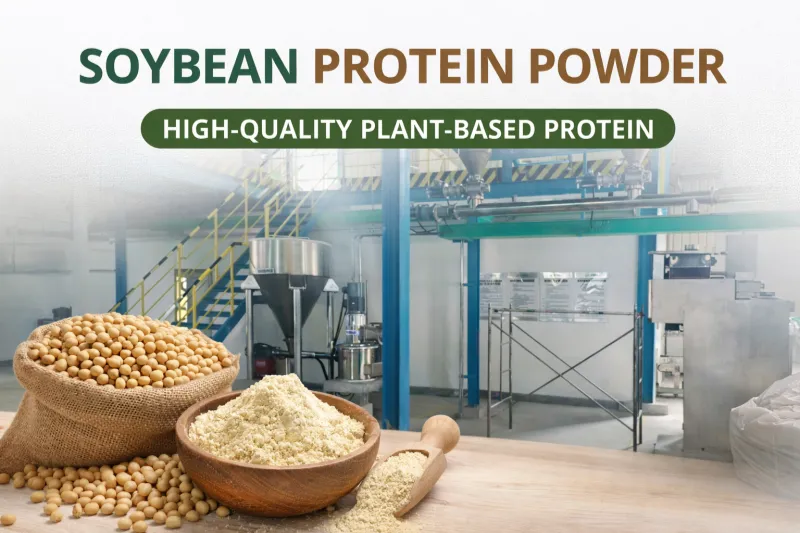
Micronized SPI has already been successfully applied in several plant-based dairy products.
For example, one plant-based dairy company used micronized SPI as the main ingredient to produce a plant-based milk product with a smooth texture and rich flavor. After launching the product, it quickly received positive feedback from consumers. Sales increased rapidly.
Compared with traditional plant-based milk products, this product showed significantly reduced graininess. Its mouthfeel was closer to that of dairy milk, while maintaining excellent stability and nutritional characteristics.
In plant-based yogurt production, micronized SPI has also played an important role. One company combined micronization with enzymatic hydrolysis technology to develop an SPI ingredient with excellent gelation performance.
Plant-based yogurt made from this ingredient features a delicate texture, rich flavor, and strong stability. It can be stored at room temperature for extended periods without phase separation or sedimentation.
Additionally, the product contains probiotics and dietary fiber, providing notable health benefits. This has made it popular among consumers.
Beyond plant-based milk and yogurt, micronized SPI can also be used in the production of plant-based cheese, ice cream, cream, and other products. It improves texture and product quality across these applications.
With continuous technological progress and innovation, the application of micronized SPI in plant-based dairy products is expected to expand further.
5. Conclusion
Micronization technology for soy protein isolate is one of the key technologies for improving the texture and quality of plant-based dairy products.
Through micronization, the solubility, dispersibility, gelation properties, and emulsifying performance of SPI can be significantly improved. This allows plant-based dairy products to achieve a smoother texture, better stability, and richer nutritional value.
Currently, micronized SPI has already been successfully applied in products such as plant-based milk and yogurt, delivering promising market performance.
However, some challenges still need to be addressed. During the micronization process, there may be potential losses of nutritional components or changes in protein functionality. Therefore, process parameters must be optimized to minimize damage to the protein.
In addition, the production cost of micronized SPI is relatively high. More efficient and energy-saving micronization technologies need to be developed to reduce production costs.
In the future, with deeper research and continuous technological innovation, SPI micronization technology will continue to improve. It will provide stronger technical support for the development of the plant-based dairy industry and promote the market toward higher quality and greater product diversity.

“Thanks for reading. I hope my article helps. Please leave a comment down below. You may also contact Zelda online customer representative for any further inquiries.”
— Posted by Emily Chen