Q: What is Soy Protein Isolate (SPI)?
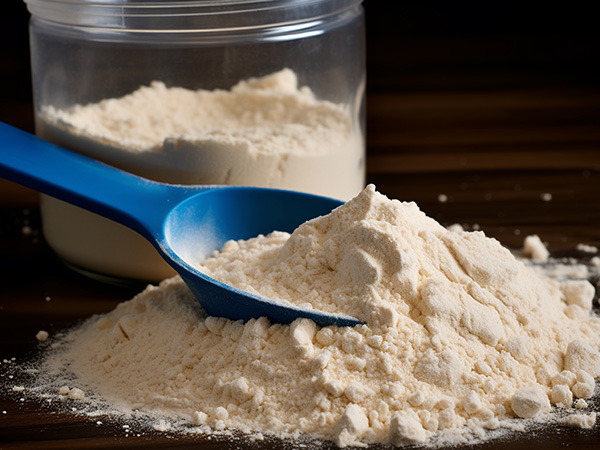
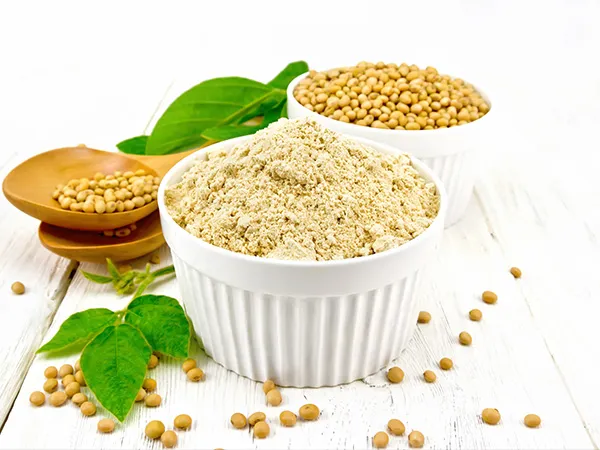
A: Soy Protein Isolate (SPI) is a high-purity protein extracted from soybeans, typically containing more than 90% protein. It is an important plant-based protein ingredient widely used in food and beverages, nutritional supplements, meal replacement powders, and meat alternatives. SPI has high nutritional value, excellent emulsification properties, and good solubility, which can improve the taste, texture, and nutritional content of foods.
Q: Why is ultrafine grinding necessary for soy protein isolate?
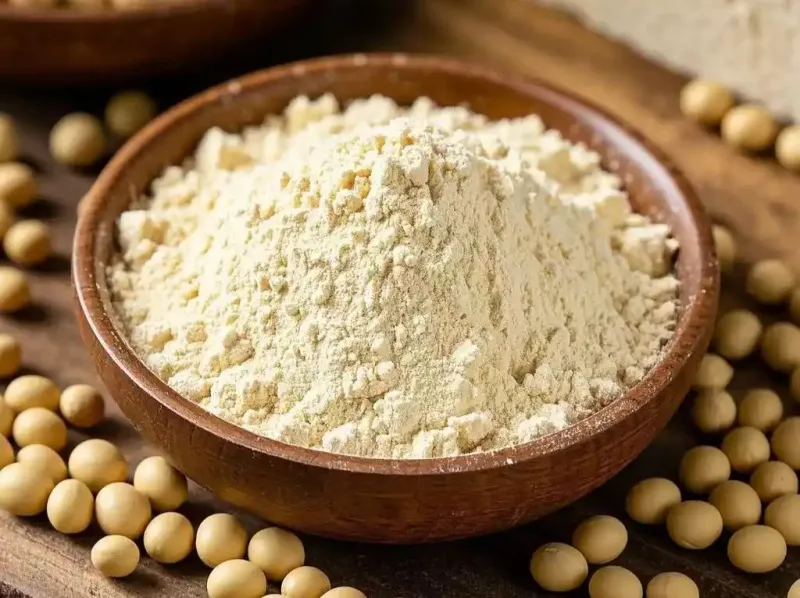
A: Traditional soy protein isolate powders have relatively large particle sizes, which can cause poor solubility, poor dispersibility, and coarse texture. Through ultrafine grinding, SPI particles can be reduced to micron or even submicron size, achieving:
- Rapid dissolution: Powder dissolves quickly in liquids, improving the taste of beverages.
- Uniform dispersion: Ensures even distribution in foods and prevents sedimentation or caking.
- Improved functionality: Enhances emulsification, gelation, and water retention properties, suitable for high-end food applications.
Q: What equipment is commonly used for ultrafine grinding of soy protein isolate?
A: The commonly used industrial ultrafine grinding equipment includes:
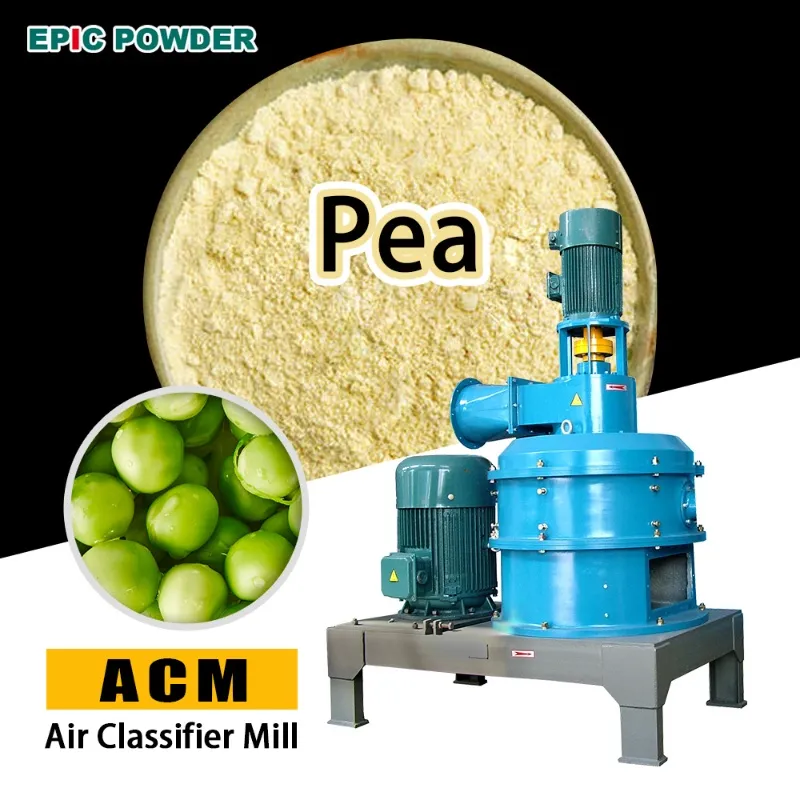
1. Air Classifier Mill (ACM)
- Suitable for ultrafine grinding and particle size classification, directly producing powders with D97 in the 5–50 μm range.
- Grinding principle: Uses a high-speed rotating grinding disc or hammer to crush the material, while a built-in air classifier controls the particle size of the output powder.
- Advantages: Uniform particle size, strong controllability, high output, suitable for large-scale production.
2. Jet Mill
- Uses high-speed air jets to collide and grind particles, achieving nano-scale ultrafine powders.
- No mechanical wear, suitable for heat-sensitive proteins.
Q: Why is the Air Classifier Mill (ACM) preferred for processing ultrafine Soy Protein Isolate?
A: Since SPI is temperature-sensitive (high temperatures can denature proteins) and requires ultrafine particle size, traditional mills cannot meet the requirements. The ACM is the industry standard due to these advantages:
- Integrated grinding and classification: The machine has a built-in classifier wheel. Fine particles are carried away while oversized particles remain for further grinding, ensuring uniform particle size distribution.
- Low-temperature operation: Circulating air cools the material during grinding, preventing protein denaturation or discoloration.
- Precise particle size adjustment: The fineness of the output powder can be controlled by adjusting the classifier wheel speed using a frequency converter, without frequent sieve replacement.
Q: How can the functionality of Soy Protein Isolate be preserved after ultrafine grinding?
A: During ultrafine grinding, attention should be paid to:
- Temperature control: Keep the grinding chamber below 60–70°C to prevent protein denaturation.
- Humidity control: Avoid moisture absorption, caking, or poor flowability.
- Equipment selection: Jet mills or ACMs are suitable for heat-sensitive materials to reduce frictional heat.
- Classifier optimization: Adjusting the classifier prevents over-grinding and powder agglomeration.
Q: How is the effectiveness of ultrafine grinding evaluated in actual production?
A: Laser particle size analyzers are commonly used to measure particle size distribution.
- D50: Particle size at which 50% of the cumulative distribution is reached (median particle size).
- D97: Particle size below which 97% of the particles fall, a key indicator of grinding completeness.
Technical note: For SPI, a target of D97 < 30 μm is generally pursued to achieve an ideal sensory experience.
Q: What is the application prospect of ultrafine Soy Protein Isolate powders?
A: With the rapid growth of the plant protein market, ultrafine SPI powders have increasingly diverse applications:
- High-end nutritional beverages: Rapid dissolution and smooth taste.
- Meal replacement powders and protein powders: Improved mixing and absorption efficiency.
- Meat alternatives: Enhanced protein network structure and texture.
- Functional foods: Emulsifiers, colloid stabilizers, dietary fiber carriers, etc.
Conclusion
Through ultrafine grinding and air classifier mill technology, SPI powders can achieve finer and more uniform particle size distributions while maintaining protein functionality and improving food processing performance. Selecting the appropriate grinding equipment and process parameters is key to ensuring high-quality soy protein isolate powders.
“Thanks for reading. I hope my article helps. Please leave a comment down below. You may also contact Zelda online customer representative for any further inquiries.
— Posted by Emily Chen