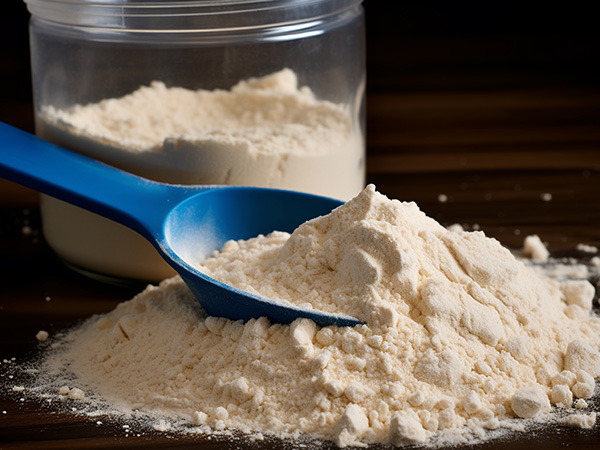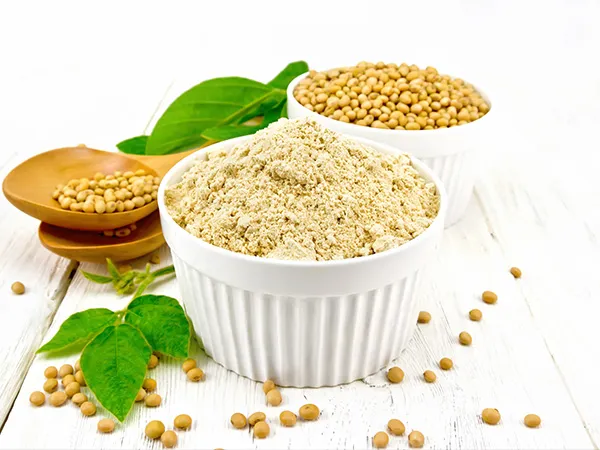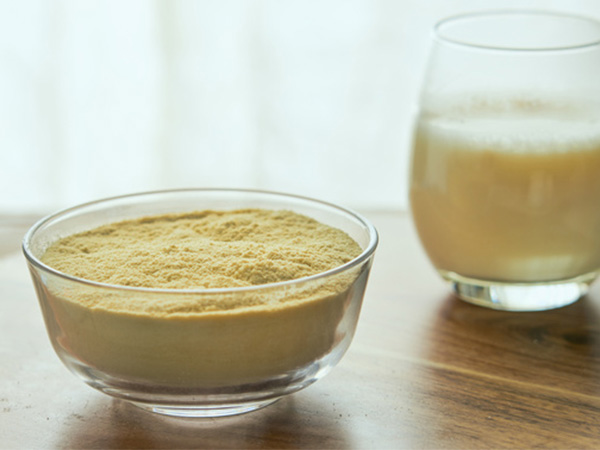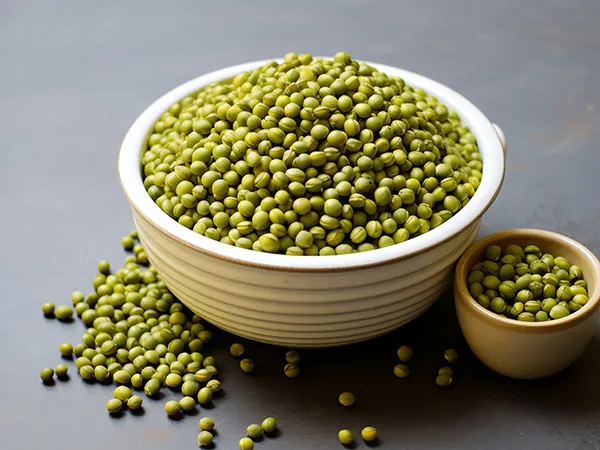
In the rapidly evolving landscape of plant-based proteins, pea protein has emerged as a frontrunner due to its excellent amino acid profile, low allergenicity, and sustainable cultivation. However, the journey from a raw yellow pea to a high-quality protein isolate or concentrate is fraught with technical challenges. One of the most critical hurdles is maintaining the biological and functional integrity of the pea protein during the mechanical grinding process. Heat denaturation—the structural change of protein molecules due to excessive temperature—can render an otherwise premium product useless for food applications.
This comprehensive guide explores the mechanisms of heat-induced damage and provides a strategic roadmap for achieving ultrafine grinding without compromising protein quality.
Understanding Heat Denaturation in Pea Protein Grinding
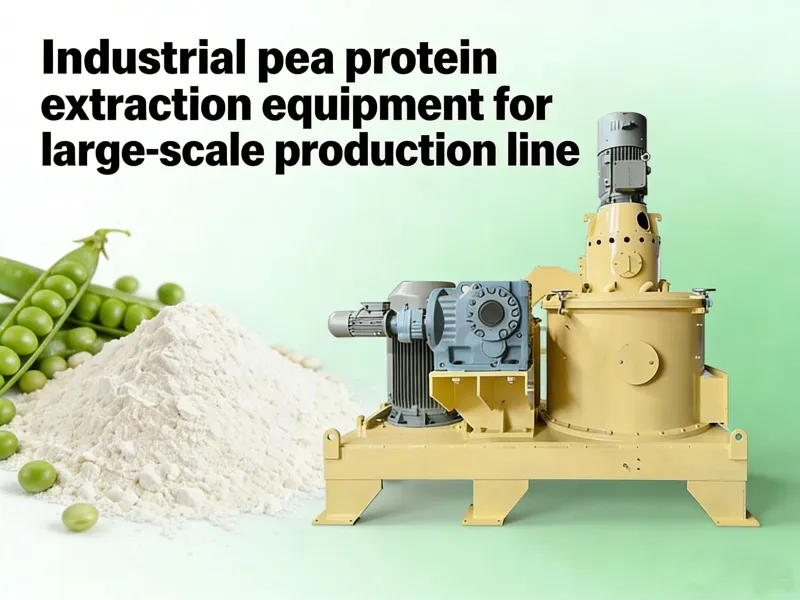
To prevent heat denaturation, we must first understand what it is and why it occurs during the grinding of peas.
What is Heat Denaturation?
Proteins are complex, three-dimensional structures held together by weak bonds (hydrogen bonds, disulfide bridges, etc.). Heat denaturation occurs when thermal energy becomes high enough to break these bonds, causing the protein chains to unfold or “uncoil.” Once unfolded, these proteins often re-aggregate in a disorganized fashion, leading to a loss of solubility and functionality.
The Origin of Heat in Pea Protein Grinding
When peas are processed in a grinding mill—specifically in dry fractionation processes—the mechanical energy used to break the cellular structure of the pea is not 100% efficient. A significant portion of this kinetic energy is converted into thermal energy due to:
- Internal Friction: As particles strike each other at high speeds.
- Mechanical Friction: Contact between the material and the grinding media (beaters, liners, or pins).
- Air Compression: In high-speed systems like Air Classifier Mills (ACM), the compression of air within the chamber generates heat.
The “Critical Threshold” for Pea Protein
Pea proteins (legumin and vicilin) typically begin to denature at temperatures between 60°C and 80°C. However, for high-end food applications where “native” functionality (like high emulsification or foaming) is required, even prolonged exposure to 45°C – 50°C can initiate subtle structural shifts that decrease the quality of the final isolate.
Critical Inquiries – Addressing the “Why” and “How”
Question 1: Why is solubility the first casualty of heat denaturation?
Answer: Solubility is arguably the most important functional property of pea protein. When heat causes the protein to unfold, it exposes the hydrophobic (water-fearing) groups that were previously tucked away inside the protein’s core. These hydrophobic groups naturally seek to avoid water, causing the protein molecules to clump together (aggregate). Once aggregated, they become insoluble. For a buyer looking to create a “smooth” protein shake or a stable meat alternative, insoluble protein results in a gritty texture and poor binding, significantly lowering the market value of the powder.
Question 2: Is high-speed grinding naturally incompatible with pea protein integrity?
Answer: Not necessarily. While it is true that higher speeds generate more friction, the key factor is residence time. Heat damage is a function of both temperature and time. A mill that operates at a very high speed but discharges the material almost instantaneously may cause less damage than a slower mill where the powder sits in a hot chamber for several minutes. Modern Air Classifier Mills (ACM) solve this by using massive volumes of airflow to “sweep” the particles out of the grinding zone the moment they reach the target size, effectively decoupling high-intensity grinding from heat accumulation.
The Strategic Benefits of Preventing Denaturation
Prioritizing temperature control during the pea protein isolation process offers three major advantages for manufacturers:
1. Retention of Functional Properties
Native (non-denatured) pea protein is a versatile ingredient. By preventing heat damage, the final powder retains its:
- Emulsification: The ability to mix oil and water, crucial for vegan mayonnaises and dressings.
- Gelation: The ability to form a firm structure when heated by the end-consumer, essential for meat analogues (plant-based burgers).
- Foaming: Vital for dairy alternatives and baked goods.
2. Improved Color and Flavor Profile
Heat doesn’t just affect proteins; it can also trigger the Maillard reaction (the interaction between proteins and residual sugars) and the oxidation of residual lipids. Effective cooling prevents the “toasted” or “beany” off-flavors from intensifying and ensures the powder maintains its desirable light-cream color, making it easier to incorporate into various food formulations without affecting the final product’s appearance.
3. Enhanced “Protein Shift” Efficiency
In dry fractionation, the goal is to separate the protein bodies from the starch granules based on size and density. Denatured proteins tend to become “sticky” or aggregate with starch. By keeping the material cool and the protein in its native state, the Air Classifier can more cleanly separate the lighter protein-rich particles from the heavier starch-rich particles, resulting in a higher protein concentration (e.g., shifting from 22% in the raw pea to 55-60% in the concentrate).
Step-by-Step Guide to Preventing Heat Damage
Achieving a “cool” grind requires a multi-layered approach combining hardware selection and process optimization.
Step 1: Selection of the Right Milling Technology
Avoid traditional hammer mills or ball mills which have high residence times and poor heat dissipation. Instead, opt for an Air Classifier Mill (ACM).
- Why: The ACM integrates grinding and air-classification in one step. The high air-to-material ratio acts as a built-in cooling system.
Step 2: Implementation of Dehumidified Cold Air Intake
Standard ambient air can be hot and humid, which exacerbates protein stickiness.
- Action: Install a chiller and air handling unit at the mill’s intake. By feeding the mill with air cooled to 5°C – 10°C, you create a thermal buffer. Even as the grinding process generates heat, the exhaust temperature remains well below the denaturation threshold.
Step 3: Precision Control of Feed Rates
Overloading the mill increases internal friction and reduces the air-to-solid ratio, causing temperatures to spike.
- Action: Use a loss-in-weight feeder to maintain a consistent, optimized feed rate that allows for maximum air contact with every particle.
Step 4: Optimization of Tip Speed and Classifier RPM
The “intensity” of the grind should be just enough to liberate the protein without over-processing.
- Action: Fine-tune the rotor tip speed. For pea protein, a tip speed of 80-100 m/s is often sufficient. Simultaneously, adjust the classifier speed to ensure that once a particle is “free,” it is immediately removed from the chamber.
Step 5: Real-time Thermal Monitoring
- Action: Install high-precision thermal sensors at both the grinding chamber and the cyclone discharge. Configure an automated “safety shut-off” or “bypass” if the discharge temperature exceeds 45°C.
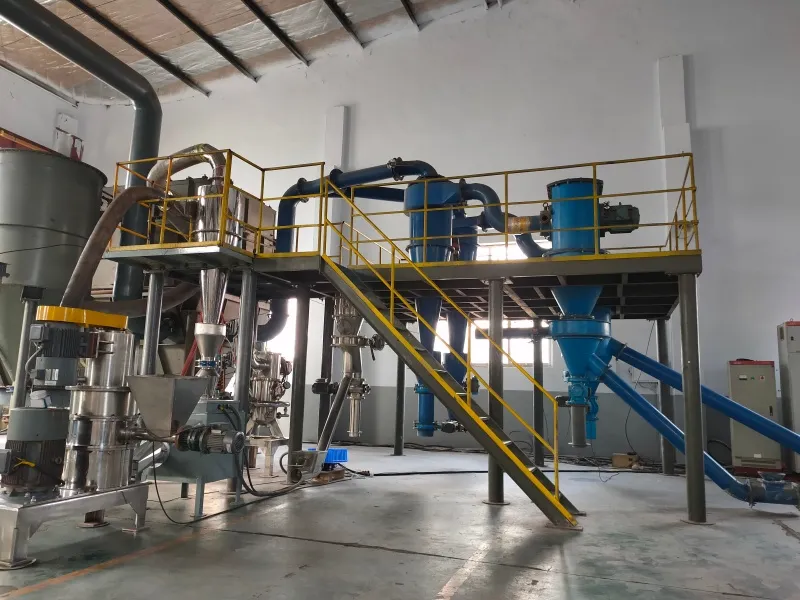
Practical Outcomes – Results from the Field
What does success look like in a real-world production environment? Here are three typical outcomes of implementing the above strategies:
Case A: The “Ultra-Fine” Success
A manufacturer processing yellow peas targeted a D90 of 20μm to ensure a smooth mouthfeel. By using a chilled ACM system, they achieved a discharge temperature of 38°C.
- Outcome: The resulting powder showed a 92% NSI (Nitrogen Solubility Index), nearly identical to the raw material. The protein content of the concentrate reached 58% via dry fractionation.
Case B: Meat Analogue Performance
A B2B supplier was struggling with “gritty” plant-based burger patties. After switching to a cold-grind process, they monitored the gel strength of their pea protein.
- Outcome: The cold-ground protein showed a 30% increase in gel strength compared to the previous high-heat process, allowing their clients to reduce the amount of expensive binders (like methylcellulose) in their recipes.
Case C: Color Consistency in Batch Production
A facility in a tropical climate suffered from “yellowing” of their protein powder during summer months. By installing a closed-loop cooling system:
- Outcome: The Whiteness Index (WI) of the powder remained consistent year-round. This stability allowed them to secure a long-term contract with a premium dairy-alternative brand that required strict color matching for their pea-based milk.
Conclusion
Preventing heat denaturation during pea protein grinding is not merely a technical preference; it is a fundamental requirement for producing high-value food ingredients. By understanding the thermal sensitivity of the material and employing advanced air-cooled milling technologies like the Epic Powder MJW Series, manufacturers can ensure that the “power of the pea” remains fully intact from the field to the fork.

“Thanks for reading. I hope my article helps. Please leave a comment down below. You may also contact Zelda online customer representative for any further inquiries.”
— Posted by Emily Chen